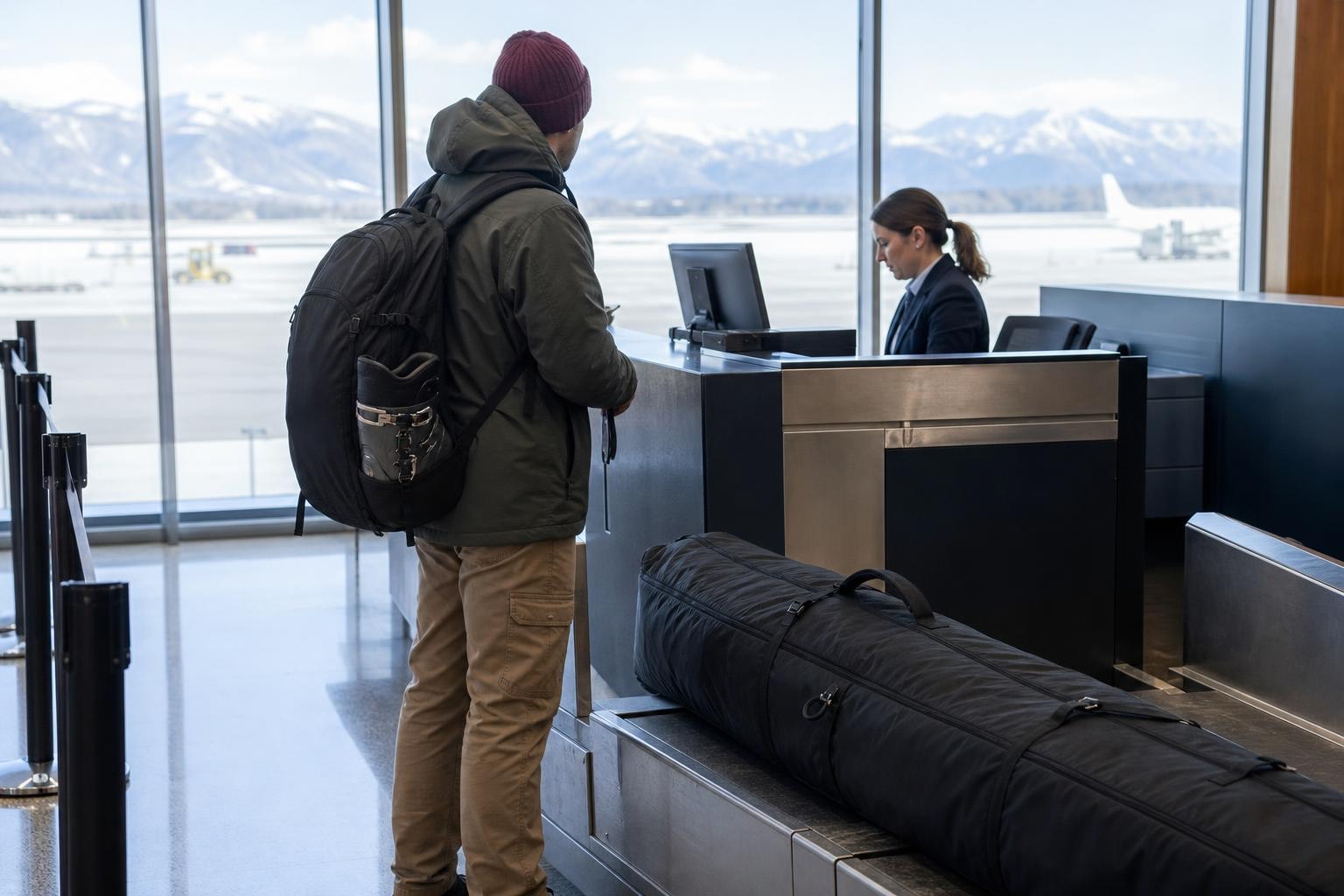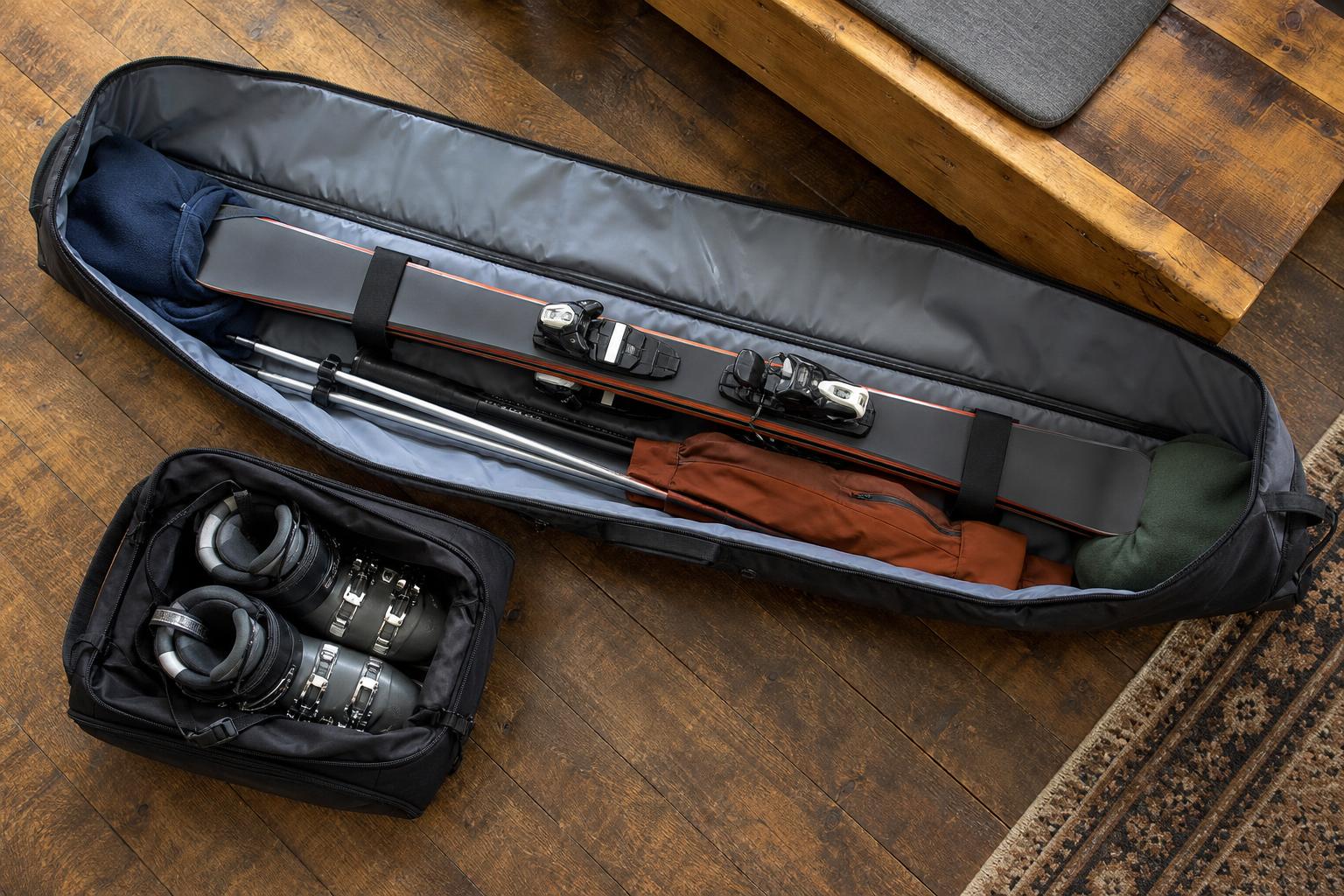
Dry the skis, place them base to base, and fasten the pair with ski straps near the tips and tails. Bundle the poles beside them. Pad the tips, tails, bindings, and any empty space with soft clothes that your airline permits, then close and weigh the bag. Put your fitted boots in a separate bag and carry them in the cabin when your allowance permits it.
That order keeps metal edges and pole tips contained, stops the gear from sliding end to end, and leaves the final weight check until everything is inside.
What you need before packing
Lay out the gear before opening the ski bag:
- A padded ski bag long enough for your longest pair
- Two ski straps for each pair
- One or two straps for the poles
- Soft padding, such as a fleece, ski pants, or clean towels
- Small covers or folded padding for pole tips and baskets
- A luggage scale
- A separate ski boot bag
- Contact details for the inside and outside of the bag
Check the empty bag first. Look for torn seams, a damaged zipper, loose wheel hardware, or an interior buckle that no longer holds. A bag that is too long leaves room for the skis to slide; a bag that is too short puts pressure on the tips and zipper.
Manufacturer designs show where protection matters. EVOC says its Ski Bag pads the nose and tail sections to protect skis and bindings from impacts and scratches. Dakine says its Tram uses padding around the bag and holds one pair of skis, boots, poles, and outerwear. We checked both official product pages on October 24, 2026. Your bag may use different sleeves, dividers, and straps, so follow its instructions where they differ from this packing order.
Step-by-step: how to pack skis in a ski bag
1. Clean and dry the skis
Brush off snow, dirt, and road grit. Dry the bases, edges, bindings, and brakes before they touch clothing or the bag lining. Moisture trapped in a closed bag can soak the padding and whatever you pack around the skis.
Do not close a wet ski bag after the return flight. Unpack it at home, wipe down the gear, and leave the bag open until the lining dries.
2. Place the skis base to base
Set one ski down with its binding facing the floor, then place the other ski on it so the bases face each other and both bindings face out. Align the tips and tails. Keep the brakes folded in their normal position without changing the binding's release setting.
Fasten one ski strap around the pair ahead of the toe pieces and a second behind the heel pieces. Place the straps where they hold the ski bodies together without pressing against a binding mechanism. The pair should lift as one bundle and should not scissor apart.
If you pack two pairs, strap each pair separately. Use the bag's padded divider when it has one. Diamant says its Tri-Fold has a padded ski divider, secure buckles, and room for two pairs of skis or one pair plus a snowboard on its official page, checked October 24, 2026. Those features confirm the useful jobs: separate hard surfaces and stop each load from moving. See the Diamant Gear directory page for the bag's published details.
3. Protect ski tips, tails, edges, and bindings
Start with the points most likely to meet the end of the bag. Wrap a folded fleece or towel around the tips, then do the same at the tails. Add padding around the bindings so their hard edges cannot rub the lining or press into another pair.
Run your hand along both sides of the strapped bundle. If an edge can touch an unpadded bag wall, place a layer of fabric between them. Keep zippers, buttons, and metal clothing hardware away from ski bases.
A ski tip cover adds padding in one high-contact area. TipSox says its cover slides over both tips of one pair and protects the tips, bases, and edges from dings and scratches. The brand lists one size for skis 85 to 105 mm wide but does not say whether that measurement is tip or waist width. We checked the official TipSox product page on October 24, 2026. A tip cover does not pad the tails, bindings, or the rest of the ski, so use it inside a padded travel bag rather than in place of one. Read the TipSox directory page for the fit caveat.
4. Bundle and place the poles
Put the poles together with the grips and baskets aligned. Secure the shafts with a strap near the grips and another above the baskets. Cover the pole tips with a purpose-made cap or a thick folded piece of cloth that cannot slip off.
Place the bundle beside the skis with the tips toward a padded end of the bag. Use an internal pole compartment if the bag provides one. Do not lay a basket or pole tip against a ski base. Tighten any internal retention strap enough to keep the poles in place without bending the shafts.
5. Add soft clothes as padding
Use ski pants, a fleece, or other soft layers to fill the channels beside the skis and the open spaces around the bindings. Keep small gear in a zipped pouch rather than loose in the ski bag. A glove or neck gaiter can migrate to the end of a long bag or fall out when security staff open it.
Before adding clothes, check your operating airline's equipment policy. Rules differ on what may travel in a ski bag or an accompanying boot bag. Our airline ski-bag policy guide links the official policy pages and explains the current contents, item-count, and weight rules for six U.S. airlines, checked October 24, 2026. It also covers routes, fares, and partner flights that can change the allowance.
Keep goggles in a protective case and your helmet in the cabin if space allows. The ski trip packing list separates checked equipment from the gear you will want if the ski bag arrives late.
6. Close the bag and stop the load from shifting
Fasten the bag's internal buckles and compression straps. Fill empty space near the ends with soft padding, then lift one end a few inches. If the skis slide inside, reopen the bag and secure the load again.
Close the main zipper without forcing it around a binding or pole basket. Tuck away removable shoulder straps if the maker tells you to do so, and keep loose webbing from hanging near wheels or handles. Add your name, phone number, destination, and trip dates inside the bag as well as on the exterior tag.
7. Weigh the packed ski bag
Put the closed bag on a luggage scale. Weigh the separate boot bag too, because some airlines use the combined weight of the ski and boot bags while others apply a limit to each piece. The airline ski-bag policy guide has the current carrier-by-carrier limits and fees rather than repeating a table here.
If the bag is over your limit, remove dense extras first. Spare shoes, toiletries, and casual clothes use weight without protecting the skis. Do not remove the straps or padding that hold the equipment in place. Weigh the bag again after every change and leave some margin for scale differences at the airport.
Pack ski boots in a separate bag
Put boots in a boot bag rather than between the bindings. A separate bag keeps hard boot buckles and soles away from ski bases, and it lets you carry your fitted boots in the cabin when the packed dimensions and your fare permit it.
Measure the boot bag after packing it. A helmet attached outside can increase its depth, and a soft compartment can bulge beyond the maker's listed size. How to fly with ski boots covers cabin placement, bag measurements, and what to keep with the boots for the first ski day.
If you plan to check both bags, confirm whether the airline treats them as one equipment item. Check the permitted contents as well. Do not assume that a policy allowing a boot bag also allows clothing, a helmet, or unrelated gear in it.
How to stay under the airline weight limit
Weigh as you build the load instead of discovering an overweight bag after it is zipped. Start with the empty ski bag, then note the weight after adding skis and poles. The difference tells you how much room remains for padding and permitted clothing.
Use these cuts in order:
- Remove casual clothes and shoes.
- Move dense small items to another bag if that bag remains within its own allowance.
- Replace bulky padding with lighter fleece layers or clean towels.
- Keep the ski straps, pole-tip protection, and padding at the tips, tails, edges, and bindings.
Wheels, thick padding, and dividers count toward the total before any gear goes inside. Check your allowance again before the return flight, when damp clothing can add weight.
Common packing mistakes to avoid
- Leaving the gear loose. Straps and compression points keep the pair and poles from sliding through open space.
- Putting pole tips against the lining. Cover the tips and point them toward a padded end.
- Letting edges touch clothing hardware. Keep zippers and buttons away from bases and edges.
- Forcing the zipper. Reposition the binding, basket, or padding instead of pulling harder.
- Packing boots between the skis. Use a separate bag so boot buckles and soles do not press against the equipment.
- Assuming clothes are allowed. Read the current sports-equipment policy for the airline operating your flight.
- Checking only the ski length. Confirm the bag length, packed weight, closure, handles, straps, and wheels.
- Skipping the final movement check. Lift one end before leaving home and repack anything that slides.
Photograph the open bag once everything is secured, then photograph the closed bag and its tag. At the airport, follow the carrier's check-in instructions and keep a copy of its ski-equipment policy on your phone.