The right ski wax is the one matched to your expected temperature and snow condition. Check the wax maker's published range, use a harder cold wax when the snow is cold or abrasive, and choose a universal wax when convenience matters more than matching a narrow window.
The ranges below come from current wax-maker pages checked October 24, 2026. They are not interchangeable color codes. A red wax from one company can cover a different range from a red wax made by another.
Ski wax temperature chart
| Wax (links to maker page) | Temperature range | What the maker calls it |
|---|---|---|
| Swix PS8 Red | 25 to 39°F (-4 to 4°C) | All-round winter glide wax |
| Swix PS7 Violet | 18 to 28°F (-8 to -2°C) | Glide wax for alpine and cross-country skis |
| Swix PS6 Blue | 10 to 21°F (-12 to -6°C) | Cold glide wax for natural and artificial snow |
| Swix PS5 Turquoise | 0 to 14°F (-18 to -10°C) | Cold-condition glide wax |
| Toko Performance Yellow | 21 to 32°F (-6 to 0°C) snow temperature | Soft hot wax for wet snow |
| Toko Performance Red | 10 to 25°F (-12 to -4°C) snow temperature | Medium-hard hot wax |
| Toko Performance Blue | -22 to 14°F (-30 to -10°C) snow temperature | Hard hot wax for cold, aggressive snow |
| Purl Purple | 10 to 32°F | Universal hot wax |
| Purl Blue | 5 to 20°F | Cold-weather hot wax |
| Purl Yellow | 20 to 35°F and above | Warm-weather hot wax |
| mountainFLOW Cold | -5 to 15°F (-21 to -9°C) air temperature | Cold hot wax |
| mountainFLOW Cool | 10 to 25°F (-12 to -4°C) air temperature | Cool hot wax |
| mountainFLOW Warm | 20 to 36°F (-7 to 2°C) air temperature | Warm hot wax |
| mountainFLOW All Temp | 8 to 30°F (-13 to -1°C) air temperature | All-temperature hot wax |
Read the column label before comparing ranges. Purl explicitly labels its figures as snow temperature. mountainFLOW says its labels refer to air temperature. Toko publishes separate snow and air figures; this table uses its snow-temperature figures. Swix advises measuring air temperature in the shade, but its individual PS product pages simply publish a recommended temperature range.
How to choose ski wax for the day's snow
Start with the forecast for the hours you will ski, not the overnight low. Then check whether your chosen maker bases its label on snow or air temperature.
Snow condition can move the choice within an overlapping range. On its wax-selection page, checked October 24, 2026, mountainFLOW says fresh snow has sharper crystals and recommends moving one category colder for new snow. The company says old, transformed snow has smoother crystals and may suit a warmer wax. Its guidance also notes that morning snow can remain colder than the air after a cold night.
Use those adjustments within one maker's system. Do not assume that every blue wax means the same temperature. If the forecast sits in an overlap, the colder formula is the conservative choice for fresh or abrasive snow. The warmer option can suit wet or older snow.
This guide covers glide wax for alpine ski bases. Classic cross-country skis can also use grip wax or klister in a kick zone, which is a different choice and chart.
Universal vs. temperature-specific wax
Universal wax covers a broad middle range with one bar. It suits a skier who travels between changing forecasts, waxes at home with a simple kit, or wants one option for ordinary resort days. Purl publishes 10 to 32°F for Purple, while mountainFLOW publishes 8 to 30°F for All Temp. Those figures show why “all temperature” does not mean every possible snow temperature.
Temperature-specific wax narrows the range. Choose it when the forecast is reliably warm or cold, when new snow calls for a harder formula, or when your universal bar does not cover the expected conditions. Overlapping ranges are normal. They give you room to account for snow age and moisture rather than forcing a decision at one exact degree.
Hot wax vs. rub-on or liquid wax
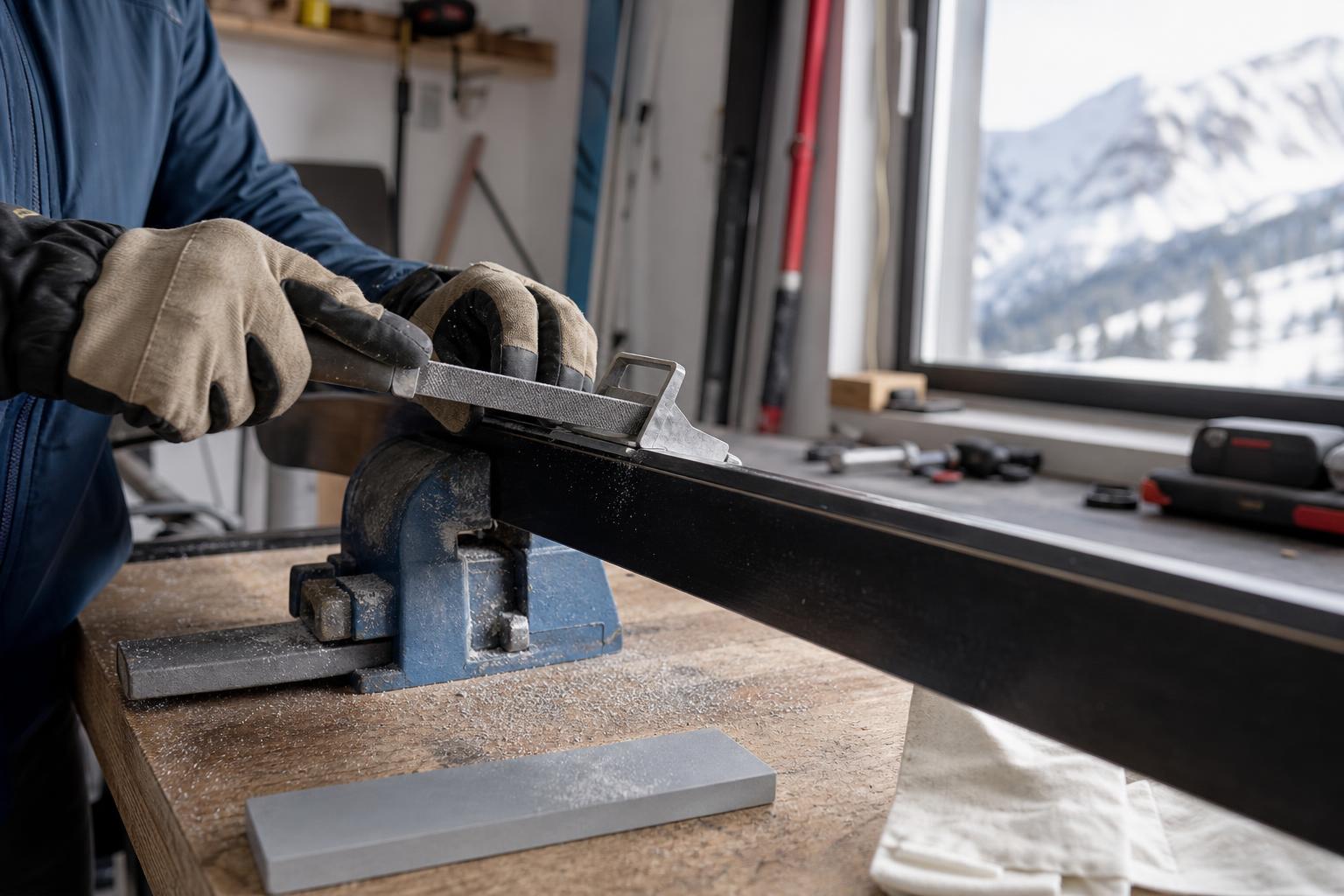
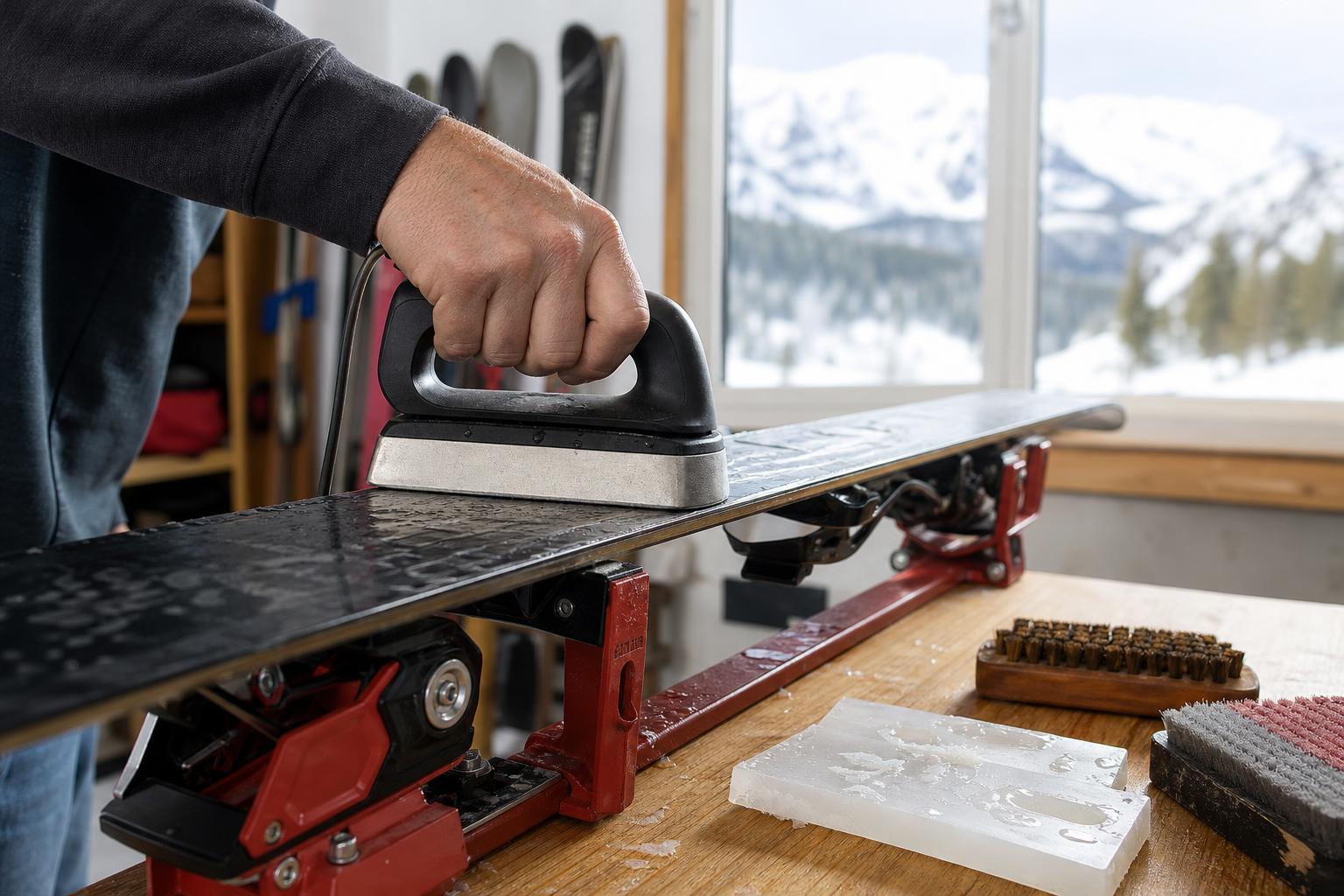
Hot wax requires a waxing iron, scraper, brush, a stable bench, and more cleanup. Heating the wax lets you spread an even layer across the base. After it cools, you scrape and brush away the excess.
Rub-on and liquid wax skip the iron. They work for a quick refresh in a parking lot or lodging where a full waxing setup is impractical. Follow that product's directions because drying and brushing instructions vary.
The tradeoff is time on snow. In its FAQ checked October 24, 2026, mountainFLOW says its Hot Wax lasts four to six days and its Quick Wax lasts one day, depending on conditions. Treat that as guidance for those products, not a lifespan promise for every brand. Cold, abrasive, or artificial snow can wear wax faster.
How to hot-wax skis
These steps follow Swix's glide-wax instructions, checked October 24, 2026. Read your wax and iron instructions before starting.
- Secure and clean the ski. Clamp it base-up, retract or hold the brakes, and remove dirt from a dry base.
- Set the wax iron. Use the recommended iron temperature on the wax label. Purl's FAQ, checked October 24, 2026, says to use the lowest heat that keeps the wax liquid and flowing and never let it smoke.
- Apply and spread the wax. Melt wax onto the base and keep the iron moving from tip to tail. Do not leave it stationary on the base.
- Let the ski cool completely. Swix says its PS wax can return to room temperature for 10 minutes before optional reheating. Follow the cooling direction for your product.
- Scrape tip to tail. Use a sharp plastic or plexi scraper and remove the wax from the edge and center groove too.
- Brush tip to tail. Clear wax from the base structure, then wipe away the dust.
Work in a ventilated space. Swix says it has stopped making and selling ski wax containing fluorine, checked October 24, 2026. Purl labels Purple PFC-free, and Toko labels its current Performance hot waxes PFC-free. Those are the makers' claims about the linked lines; they do not make every old bar in a tuning box fluoro-free.
How often to wax skis
Check the bases after several ski days and after abrasive or dirty snow. A pale, chalky-looking base or a clear loss of glide tells you to wax sooner. A universal calendar cannot account for the wax formula, snow, distance, or base condition.
Use mountainFLOW's four-to-six-day hot-wax estimate as one product-specific reference. Rub-on wax may need application each ski day. Wax before a trip if the bases look dry, and leave a layer of hot wax unscraped for summer storage if your wax maker's storage instructions call for it.
Wax protects the running surface, but it does not stop metal edges and ski tips from rubbing during transport. Use the packing steps in how to carry skis without scratching them and compare the coverage of ski tip covers before the drive to the hill.