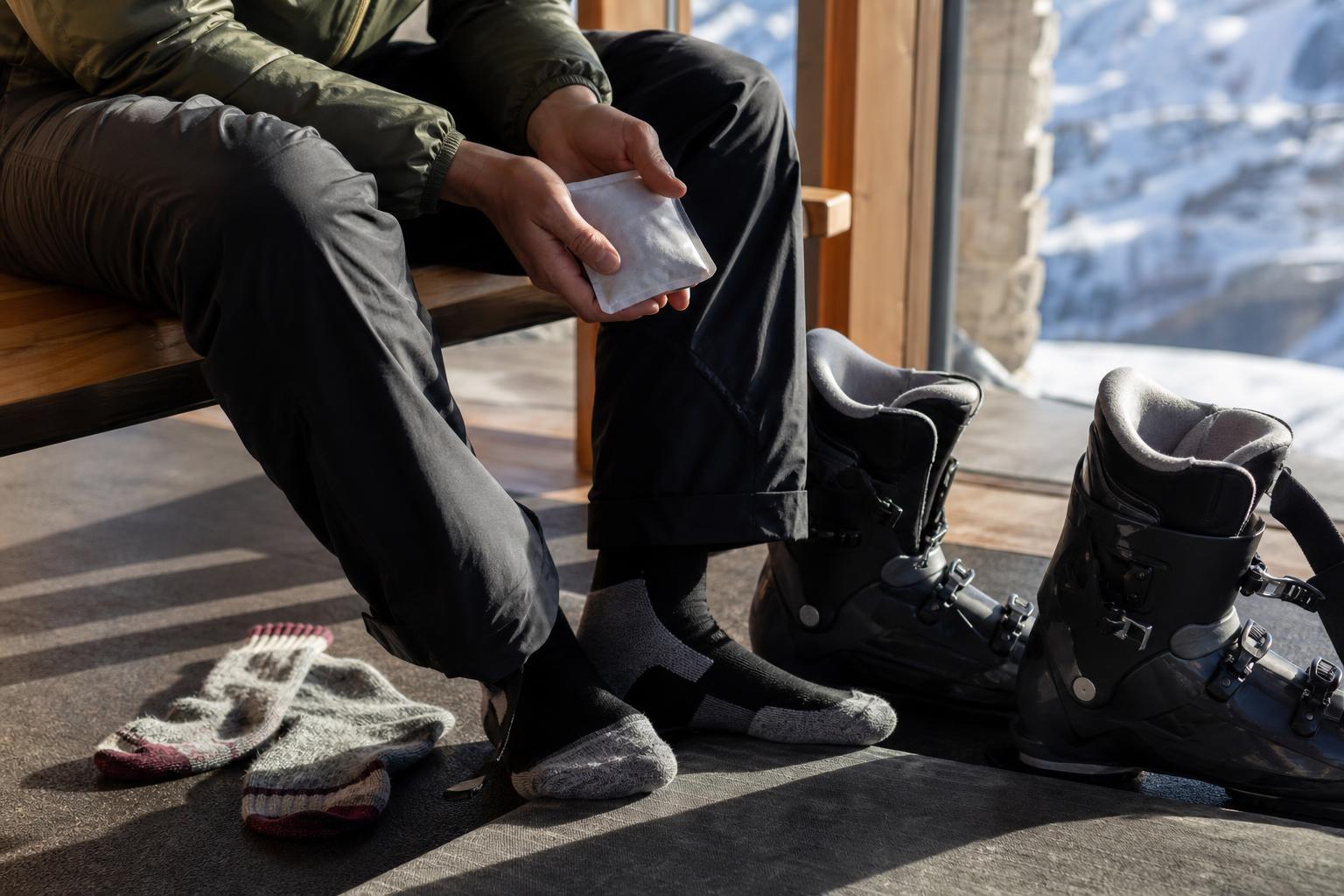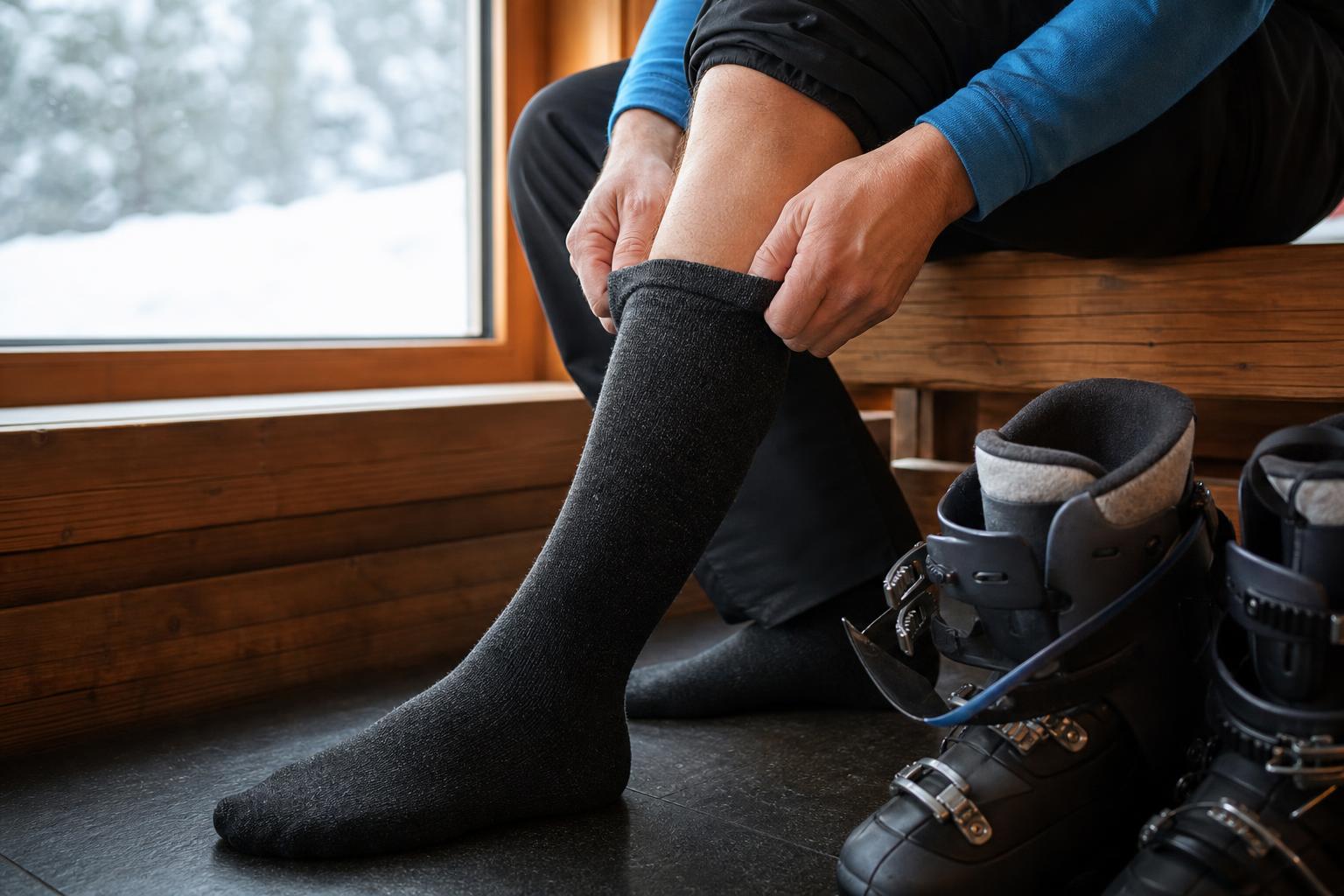
Ski socks are long, close-fitting socks made for ski boots. They usually reach just below the knee, move moisture away from the foot, and put cushioning in selected zones instead of adding thick padding everywhere. Wear one pair and pull it smooth before you close the boot cuff.
The thin construction surprises people who expect more fabric to mean more warmth. A ski boot already holds the foot closely. A bulky sock can use up room around the toes and shin, while a sock that is too large can wrinkle. The practical choice is the thinnest sock that fits your foot and boot without gaps, folds, or uncomfortable pressure.
We checked the official maker pages linked in this guide on October 24, 2026. Cushion levels, fiber percentages, and named features below are the makers' published descriptions, not our own wear findings.
What are ski socks?
A ski-specific sock differs from an everyday crew sock in four useful ways:
- Height: It extends above the ski boot cuff, usually to just below the knee.
- Fit: It follows the foot and lower leg closely so spare fabric does not bunch at the heel or toes.
- Materials: Makers use merino wool, synthetic fibers, or blends that handle moisture better than an ordinary cotton sock.
- Cushioning: Padding can sit at the shin, sole, heel, ankle, or toes while the rest of the sock stays thin.
That combination gives your foot one smooth layer between skin, liner, and shell. It also explains why hiking socks and thick winter socks are poor substitutes when they wrinkle, stop below the cuff, or crowd a fitted boot.
The name can cause one specific mix-up. TipSox are padded covers for ski tips, not socks for your feet. They protect one part of a ski during carrying or packing and do not replace ski socks.
Ski sock height: why thin and over the calf
Alpine ski boots are designed to hold the heel and lower leg securely. Adding sock thickness changes how much room remains inside that fit. Smartwool's ski and snowboard sock guide says its non-cushioned models suit close fits in new or tight boots, while its more cushioned models add material at the shin, sole, foot, or leg. Darn Tough likewise sorts its ski and snowboard socks by yarn weight and cushion rather than treating the thickest option as the default.
Thin does not mean loose or flimsy. The sock should lie flat against the foot, and the heel pocket should meet your heel. Smartwool says an oversized sock can bunch around the heel and toes, while an undersized sock can restrict circulation. Both problems can leave your feet uncomfortable inside the boot.
Over-the-calf height solves a separate problem. The sock rises above the plastic shell and liner cuff, leaving no exposed edge where a shorter sock could rub or slide. Darn Tough describes most of its alpine ski and snowboard socks as over the calf, landing just below the knee. Its shorter Nordic Boot height is made for lower cross-country boots.
Pull the cuff high enough to stay above the boot, but do not fold it over. A doubled cuff creates a ridge. If the sock pinches your calf or leaves a deep mark, try another size or a different cuff construction.
Cushioning zones: shin, sole, heel, and toes
Cushion labels do not tell the whole story. Two socks called "light cushion" may put their padding in different places. Read the product description for both the amount and location.
Common zones include:
- Shin: Padding can soften contact with the boot tongue. This is what shoppers often mean by "ski shin socks."
- Underfoot: Cushioning under the sole adds material between the footbed and foot.
- Heel and ankle: A shaped heel pocket and local padding can reduce spare fabric around these contours.
- Toe: Some socks reinforce or cushion the toe area, but excess volume there can reduce wiggle room.
Match the zone to the pressure you actually feel. If a boot already fits closely over the instep, a fully cushioned foot may make that area tighter. If the shell feels comfortable but the tongue presses the shin, a thin sock with targeted shin padding may make more sense than full cushioning.
A sock cannot correct the wrong shell size, a collapsing liner, or a painful footbed. Take persistent numbness, sharp pressure, heel lift, or shin pain to a ski bootfitter. Bring the socks you plan to wear so the fitter sees the same amount of material that will be in the boot on the hill.
Merino wool vs synthetic ski socks
Most ski socks are blends rather than a single fiber. The blend lets a maker combine wool's moisture and odor-management properties with nylon or similar fibers for structure and durability, plus elastane or spandex for stretch.
Merino blends use fine wool with one or more synthetic fibers. Smartwool says merino manages moisture better than cotton in its snow socks. Darn Tough says it combines merino with nylon and elastane in its ski and snowboard range. The exact blend changes by model, so check the product page rather than treating all merino socks as the same.
Synthetic socks may use polyester, nylon, acrylic, polypropylene, elastane, or a maker's named yarn. Their feel, drying behavior, and durability depend on the blend and knit. Makers design these fibers and mesh zones to wick moisture away from the foot. Check the fiber label if you avoid wool or need a specific material against your skin.
Cotton is a poor match for a damp ski boot. Both Smartwool and Darn Tough tell skiers to avoid it because it holds moisture compared with their technical blends. Damp fabric against the foot can feel cold and can increase rubbing.
Material does not decide fit by itself. A well-sized synthetic sock can fit better than the wrong merino size, and a wool blend can still bunch if it is too large. Start with fit, then choose the material that suits your skin, washing routine, and preference.
Wear one pair only
Put one ski sock on each foot. Do not layer a second pair over the first.
Darn Tough's official guide says doubling socks can create bunching, restrict circulation, and leave less room in the boot. One pair also removes a sliding layer, which helps the sock stay smooth against your skin. If you want more cushioning, choose a single sock with padding in the needed zone.
Cold feet do not automatically call for thicker socks. Check these causes first:
- The sock or boot is tight enough to squeeze the toes.
- The sock is damp from sweat or from the previous ski day.
- Fabric is folded around the toe, heel, or cuff.
- The boot liner is wet.
- The boot fit or footbed needs attention.
Pack a fresh pair for the next day and dry the used pair fully. Our ski trip packing list keeps one pair with the first-day clothing in the cabin when you fly.
How ski socks should fit
Use the maker's current size chart, which may map shoe size differently from another brand. If you fall between sizes, compare both the foot-length range and calf fit instead of guessing from your usual casual-sock size.
Check the sock before you put the boot on:
- Seat your heel in the heel pocket.
- Smooth the toe box so no seam or fold sits under a toe.
- Pull the leg up without twisting it.
- Confirm that the cuff finishes above the boot liner.
- Wiggle your toes and check that the fabric stays close without pulling tight.
Then buckle the boot as you normally ski it. Notice whether the padding changes pressure over the shin, instep, ankle, or forefoot. Try the sock with the actual boot rather than judging it in a shoe.
Blisters can come from movement, folds, moisture, or a boot-fit problem. Repeated trouble in the same spot deserves a bootfitter's attention. A tighter sock is not a reliable fix for a loose shell or liner.
Ski socks vs snowboard socks
The categories overlap. Darn Tough says it does not separate ski and snowboard models because its snow socks can work in either type of boot. Smartwool publishes distinct cushioning descriptions: its ski options include shin-focused padding, while its Snowboard Medium description calls for cushion through the foot and leg.
Choose based on the boot in front of you:
- Both socks should rise above the cuff.
- Both should fit without wrinkles or heel slip.
- A close ski shell may favor less bulk or shin-specific padding.
- A roomier snowboard boot may accommodate a different cushion map.
You can use a sock labeled for the other sport if its height, fit, and cushioning work with your boot. The product label matters less than the result inside the boot.
Ski sock brands and their cushioning lines
This list shows how four makers describe current product lines. It is not a ranking, and we have not worn these models. We checked each official page on October 24, 2026.
- Smartwool Ski Over the Calf: Smartwool lists Zero Cushion and Targeted Cushion versions. Its cushion guide defines Zero Cushion as minimal padding and Targeted Cushion as padding in selected areas.
- Darn Tough ski and snowboard socks: The maker lists Ultralight, Lightweight, and Midweight yarns. Its guide describes Ultralight as uncushioned, Lightweight models with underfoot or shin cushioning, and Midweight with underfoot cushioning plus shin padding on selected styles.
- Icebreaker Merino Ski+: Icebreaker describes the Ski+ Medium Over the Calf as fully cushioned. Its Ski+ Light is the lower-cushion option in the line.
- Le Bent Targeted Cushion Merino Logo Snow Sock: Le Bent describes a Targeted Shin Cushion Profile with padding in key impact zones.
These names are not interchangeable. "Medium," "light," and "targeted" describe each maker's own construction. Open the model page and look for the actual cushion map before comparing two lines.
What goes over and under ski socks
The sock goes directly against your skin. Darn Tough says some skiers tuck full-length base-layer bottoms into their boots while others keep the cuffs above the boots; the important check is how the layers feel inside your own boot. Three-quarter-length base-layer bottoms avoid that overlap.
If a full-length base layer or legging goes into the boot, smooth its cuff so it does not create a fold or ridge against your shin. Pull loose pant cuffs outside the liner. See what to wear under ski pants for the full lower-body layer setup, or what to wear skiing for the complete outfit.
Washing and drying ski socks
Follow the care label for the exact pair. Wool blends and synthetic blends can call for different wash temperatures, cycles, and drying methods. Close hook-and-loop tabs on other clothing before washing so they do not snag the knit.
Turn the socks out after skiing and let moisture escape. Do not leave a damp pair balled inside a boot overnight. Pack at least two pairs for a multi-day trip so one can dry while you wear the other; this does not mean wearing both at once.
Before the next ski day, run a hand inside each sock for grit, wrinkles, or a damaged seam. Put the dry pair on before stepping into the liner. Small folds become noticeable once the buckles close.
A quick choice for your next ski day
Start with an over-the-calf sock in the maker's size for your foot. Choose zero or light cushioning when the boot fit is already close. Look at targeted shin cushioning if the tongue contact bothers you, and consider broader cushioning only when the boot has room for it.
Buy for the boot you own, not for the coldest number on a package. One dry, smooth pair leaves the boot fitter's work intact and gives your toes the space the shell allows.