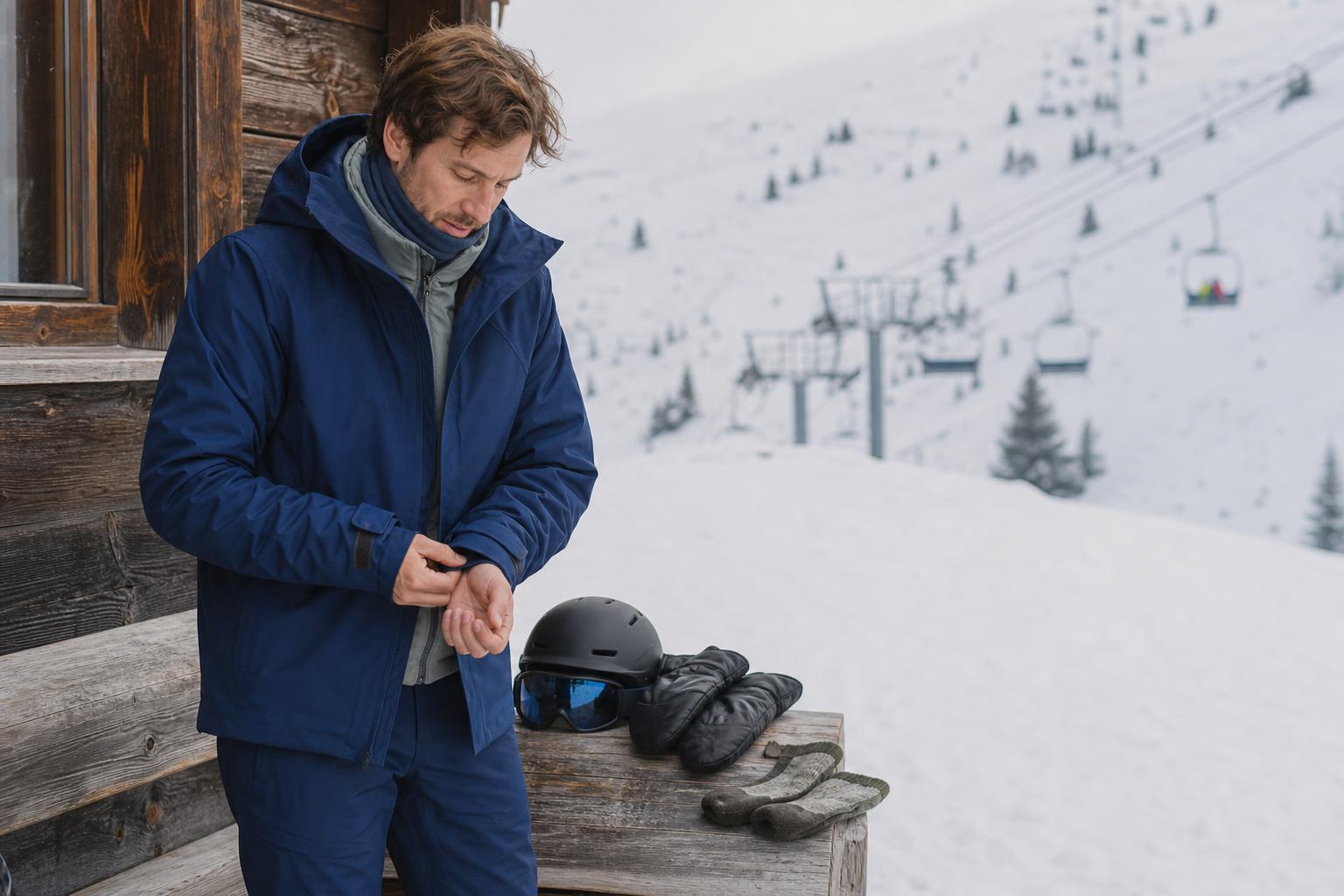
Wear three adjustable layers for skiing: a base layer next to your skin, a warm midlayer, and a waterproof, wind-resistant jacket and ski pants. Add one pair of ski socks, gloves or mittens, a helmet, goggles, and a neck gaiter. Change the weight of the layers for the weather rather than piling on clothes until your ski boots and jacket feel tight.
That is the short answer. The right outfit keeps wet snow outside, moves sweat away from your skin, and lets you remove insulation when the sun comes out. It does not need to match, and it does not need to come from a ski-specific collection at every layer.
The three-layer system
Think of each layer as having one job:
- Base layer: manages moisture next to your skin.
- Midlayer: holds warm air and provides insulation.
- Outer layer: blocks wind and wet snow.
You will not always wear all three. A warm spring afternoon may call for a lightweight base layer and shell. A cold, windy day may call for a warmer base layer, an insulating midlayer, and a closed shell. Start slightly cool, ski an easy run, then adjust before sweat soaks the layers.
Patagonia's cold-weather layering guide says its synthetic Capilene base layers move sweat away from skin, while fleece and insulated midlayers add warmth under a protective shell. We checked that brand guide on October 24, 2026. Use the system, not a fixed layer count, because effort, wind, sun, and chairlift time all change how warm you feel.
Base layer: what goes next to skin
Wear a long-sleeve base-layer top and full-length bottoms made from merino wool or a performance synthetic such as polyester. The fabric should sit close enough to move moisture without restricting your shoulders, hips, or knees. Tuck the top if that stops a cold gap, but keep the bottom cuff above the ski-boot cuff so fabric does not bunch against your shin.
Smartwool's merino guide, checked October 24, 2026, says merino fibers manage moisture, help regulate body temperature, and resist odor buildup. Burton's base-layer guide, also checked October 24, says polyester dries more quickly than merino and that either material can work as a lightweight layer in warmer weather. Those are brand-published material descriptions, not a reason to replace a base layer that already fits and keeps you comfortable.
Choose by trip and preference:
- Merino wool: useful when you want to wear the same layer on several ski days and air it out overnight.
- Synthetic: useful when quick drying and easy washing matter most.
- Blend: can combine wool with synthetic fibers for a different feel, stretch, or drying time. Read the actual fiber label.
Skip cotton long underwear and cotton T-shirts. Burton's guide says damp cotton pulls warmth away rather than serving as a useful cold-weather base layer. That page was checked October 24, 2026.
For a closer look at the lower half, read what to wear under ski pants.
Midlayer: add only the warmth you need
A fleece jacket, wool sweater, or light synthetic insulated jacket can work as a midlayer. It should fit under the shell without flattening its insulation or making the jacket tight across the shoulders. Avoid a long, bulky hem that bunches above your ski pants.
A shell jacket has little built-in insulation, so you will usually use the midlayer to control warmth. An insulated ski jacket may need only a base layer in ordinary winter weather. Before buying another layer, put on the complete outfit and move as you will on the mountain: reach forward, rotate your torso, squat, and sit as if you were on a chairlift.
Bring one removable midlayer rather than two tight ones. A zip fleece is easy to vent at lunch or take off when the weather warms. If you carry a small pack, put the dry midlayer inside it rather than tying it around your waist near the lift.
Outer layer: ski jacket and pants
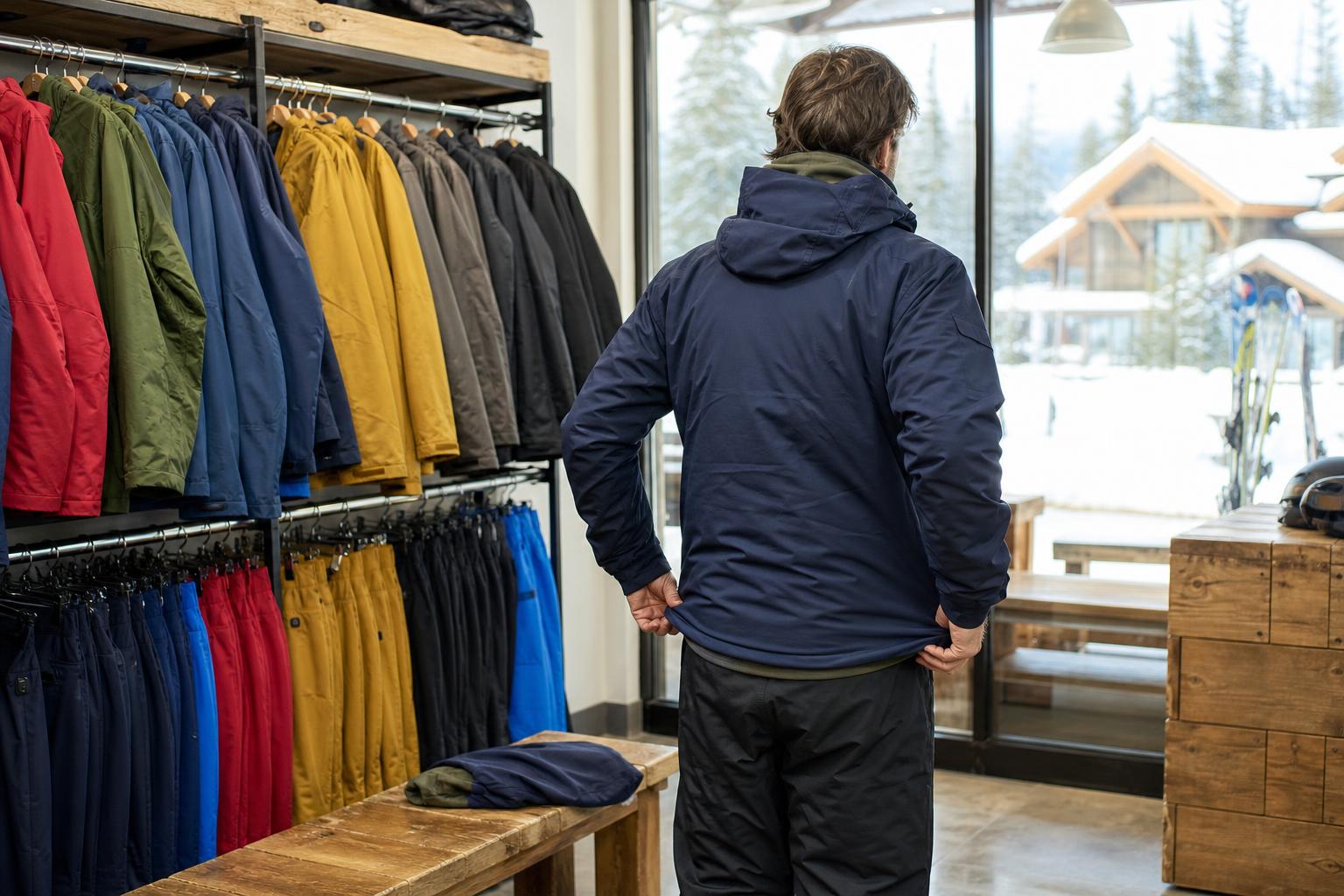
The outer layer is a ski jacket plus ski pants or bibs. Look for enough room to move, closures that seal around gloves and boots, and vents you can operate with gloves on. A powder skirt, bib, or higher pant waist can reduce the opening where snow enters after a fall, but fit matters more than the label on the rack.
What 10K and 20K waterproof ratings mean
A jacket or pant labeled 10K has fabric associated with a 10,000 mm water-column result; 20K refers to 20,000 mm. The number describes laboratory resistance to water pressure, not a temperature range and not a promise that the whole garment will stay dry.
GORE-TEX's explanation of water-column ratings, checked October 24, 2026, says the measurement is expressed in millimeters of water pressure. It also warns that the number alone does not represent real rain, garment construction, or how long waterproofness lasts. Check the fabric rating alongside sealed seams, closures, condition, and care instructions. A high number cannot compensate for an open vent or a worn seam.
If you do not own snow pants, rent or borrow them for your first day. Roomy waterproof rain pants over a base layer can be a temporary option for a short beginner session, especially if you can move freely and the cuffs fit over ski boots. They may lack insulation, reinforced cuffs, vents, and a snow gaiter. Jeans, leggings, and sweatpants are not substitutes for a weather barrier.
Ski bibs vs. pants
Ski bibs extend above the waist and hang from shoulder straps. Ski pants stop at the waist. Both can work for resort days, powder, and touring when their weather protection, insulation, vents, and fit suit the conditions.
Choose bibs if you want more coverage when you fall or ski deep snow. The higher body reduces the gap between jacket and waistband, while suspenders remove pressure from a tight waistband. Bibs also tend to add torso pockets and warmth. They suit beginners who expect to spend time in the snow, cold-running skiers, and anyone whose pants slide down. Check that the straps do not dig under a backpack and that a drop seat or long side zip makes bathroom breaks manageable.
Choose pants if you run warm, dislike shoulder straps, or want to pull the outer layer on and off without removing your jacket. Bathroom breaks are simpler, and there is less fabric around your torso. Pants need a secure, comfortable waist; a poor fit can slip, pinch, or leave a gap where snow enters.
REI's bibs-versus-pants guide, checked October 24, 2026, supports those tradeoffs and notes that either style can use leg vents. Try both over the base layer you plan to wear. Squat, sit as if on a chairlift, reach for the boot cuffs, and test pocket and bathroom access before choosing.
Socks, boots, and shoes
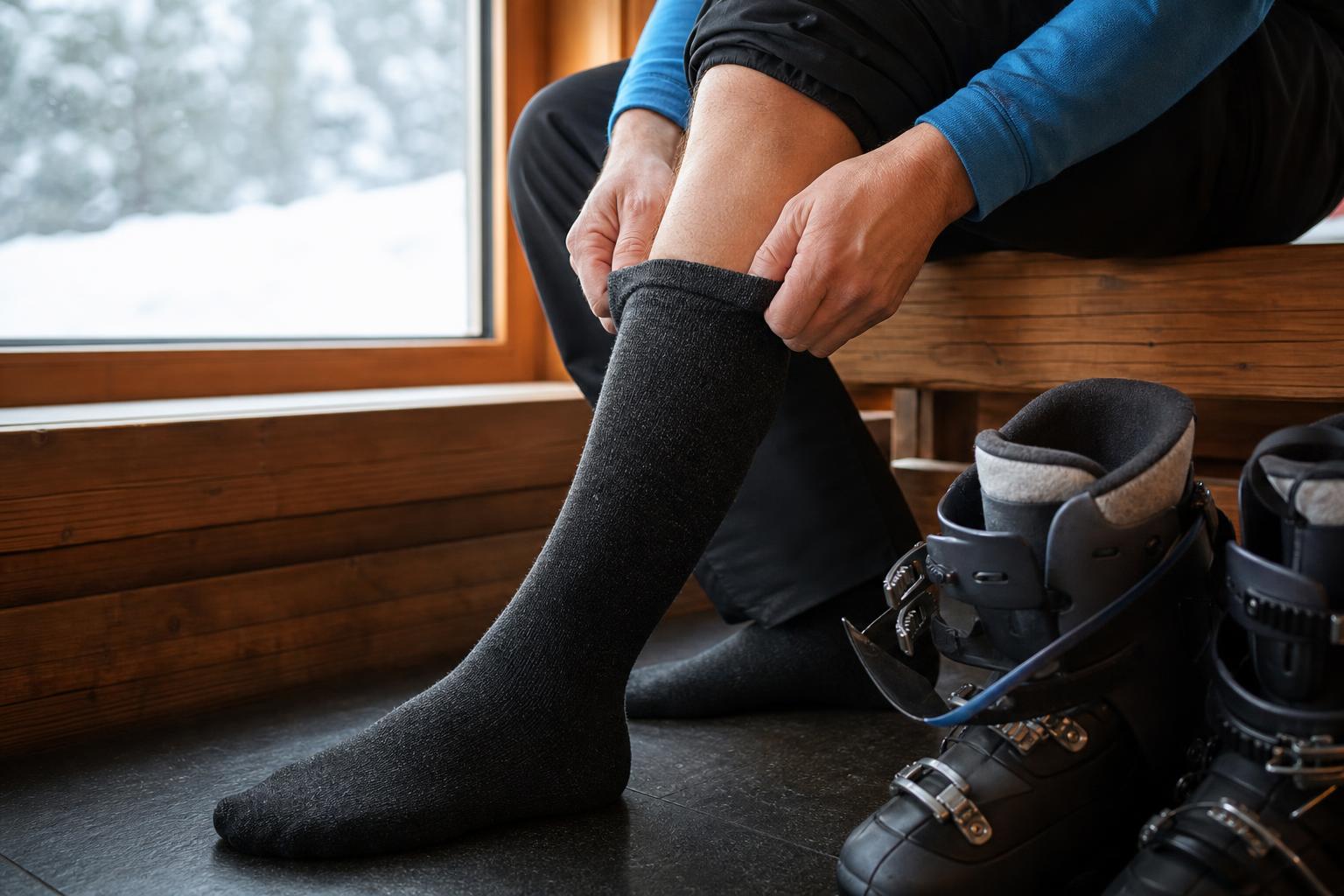
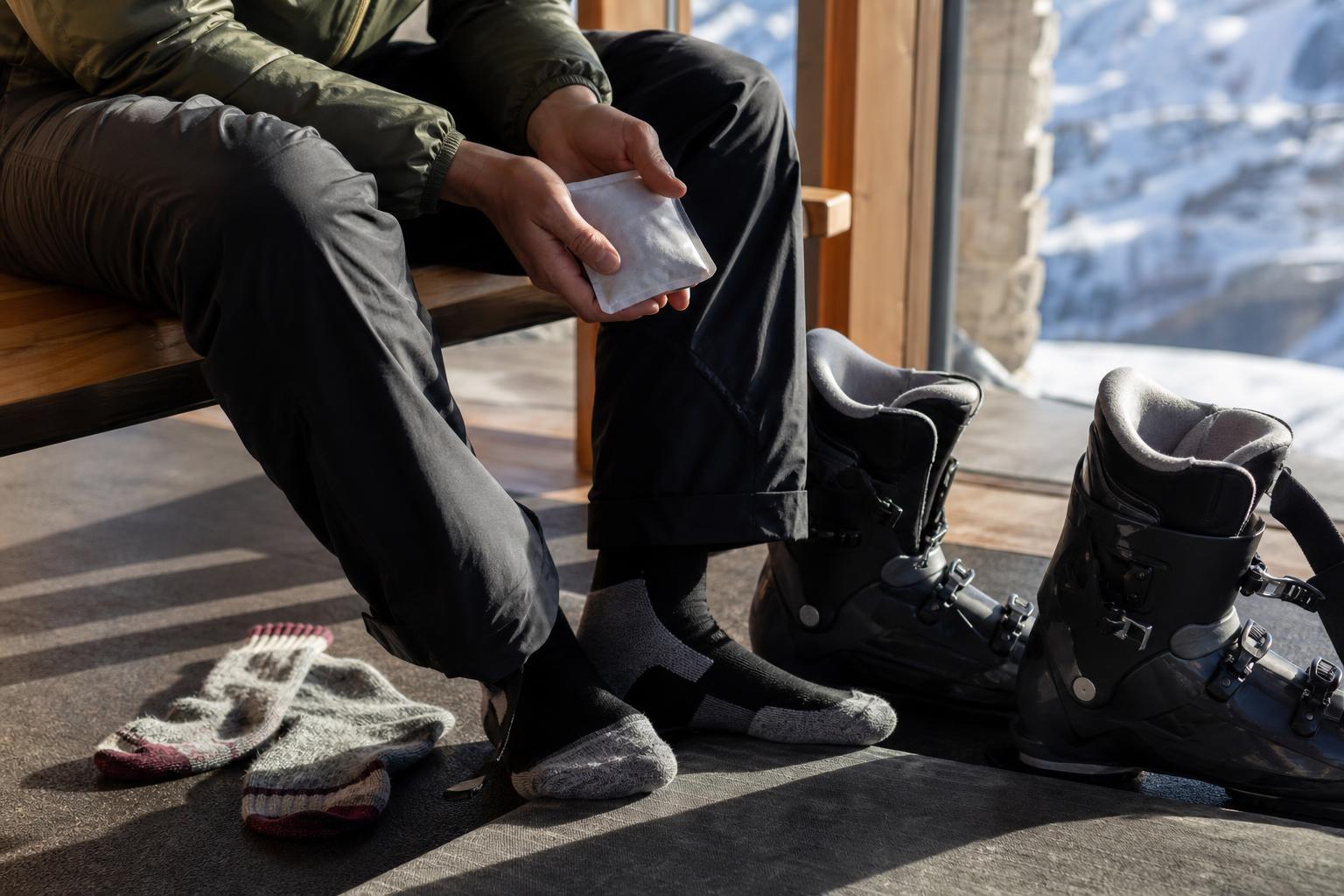
Wear one pair of over-the-calf ski socks inside your ski boots. Pull the sock smooth and keep base-layer cuffs, leggings, and loose fabric out of the boot. More sock is not automatically more warmth. Two pairs or one very thick pair can crowd the boot and create pressure.
Smartwool's cushion guide, checked October 24, 2026, pairs its thinnest ski-sock cushioning with close-fitting boots and adds cushion as boots have more room. Treat that as the brand's fit framework, not a universal sizing rule. Your sock should fill no more space than your fitted boot allows. Our ski socks guide explains height, cushion, materials, and boot fit in more detail.
Ski boots are the footwear that connects to alpine ski bindings. Wear waterproof winter shoes or snow boots to the lodge, then change into ski boots. Ordinary hiking boots, sneakers, and snow boots do not click into alpine bindings.
Hands, head, eyes, and neck
Gloves or mittens
Choose waterproof ski gloves or mittens with cuffs that meet your jacket sleeves. Mittens trade some finger independence for warmth. Hestra's cold-hands guide, checked October 24, 2026, says fingers share warmth inside a mitten because they are not separated by fabric. Gloves make buckles, zippers, and phones easier to handle.
Pack a dry spare if you are learning, expect wet snow, or will ski for several days. Thin liner gloves can make transitions easier, but they should not make the outer glove tight.
Helmet and goggles
Wear a ski helmet, not a knit hat under a loose helmet. The helmet should sit level, feel snug around the whole head, and stay in place when you shake your head with the chin strap fastened. Follow the helmet maker's fitting and replacement instructions.
Fit the goggles and helmet together. Smith's helmet fitting guide, checked October 24, 2026, says the helmet should sit just above the goggles without pushing them down and without a gap between them. Check for pressure at the nose and temples before wearing the pair all day.
Goggle lens darkness should match light conditions. Smith's goggle guide, checked October 24, explains that a lower visible-light-transmission number means a darker lens for bright conditions, while a higher number lets in more light for cloudy or low-light skiing. If you own one lens, check the maker's stated light range and the day's forecast.
Neck gaiter
A neck gaiter closes the gap above your jacket collar and can cover your cheeks in wind. Choose one that fits under the helmet without creating folds or changing the helmet fit. Carry it even on a mild day if the forecast includes wind or falling snow.
Ski helmet sizing: measure, then check the fit
Measure your head before choosing a size. Wrap a flexible tape around the largest part of your head and keep it level. Smith's helmet guide, checked October 24, 2026, places the tape about one inch above the eyebrows and records the result in centimeters. If you only have string, mark where it overlaps, then measure the string with a ruler.
Do not assume the same letter fits across brands. These adult snow-helmet charts came from the makers' pages on October 24, 2026:
| Maker and chart | S | M | L | XL |
|---|---|---|---|---|
| Smith adult snow helmets | 51–55 cm | 55–59 cm | 59–63 cm | 63–67 cm |
| Giro adult snow helmets | 52–55.5 cm | 55.5–59 cm | 59–62.5 cm | 62.5–65 cm |
Use the chart for the exact helmet and fit shape you plan to buy. Smith publishes separate ranges for its Round Contour Fit, for example. If your measurement sits on a boundary, try both neighboring sizes rather than relying on the letter.
Loosen the fit system before putting the helmet on, then tighten it until the helmet feels snug without feeling tight. Smith's guide says a correct fit stays put when you shake your head up and down and side to side. Giro's chart page, checked October 24, 2026, says the helmet should sit low enough to protect the forehead without blocking vision.
Bring your goggles to the fitting. Smith says there should be no gap between the goggle's top edge and the helmet, and the helmet should not push the goggles down. Check that the frame does not press painfully at your nose or temples. A matching logo does not prove compatibility, so test your own helmet and goggles together.
After a crash or impact, follow the maker's replacement instructions for that helmet. Smith's replacement guidance, checked October 24, 2026, says to replace its helmet after a crash or impact even when it looks undamaged because the impact can weaken the materials.
What to wear skiing by weather
Do not treat a garment label as a personal temperature guarantee. Use the forecast, wind, precipitation, your usual cold tolerance, and how hard you expect to ski.
| Conditions | Starting outfit | Adjustment to carry |
|---|---|---|
| Very cold or windy | Warmer base layer, insulating midlayer, closed shell vents, mittens, neck and face coverage | Dry spare gloves and an extra midlayer |
| Ordinary winter cold | Midweight base layer, fleece or light insulation, jacket and ski pants | Open vents or remove the midlayer if you get damp |
| Mild or sunny | Lightweight base layer, light midlayer if needed, uninsulated shell | Keep the shell and neck gaiter available for wind |
| Wet snow | Moisture-managing base layer, minimal needed insulation, fully closed weather barrier | Dry gloves and socks for the next session |
If your back feels damp, vent or remove insulation at the next safe stop. If you feel cold on the chair, close vents and add the dry layer before the next run. Adjusting early works better than waiting until clothes are soaked or hands are numb.
What to wear for spring skiing
Spring mornings can start firm and cool, then turn sunny and slushy. Wear a lightweight base layer with a waterproof shell, and carry a thin fleece for the first lifts or a weather change. Shell pants or lightly insulated pants are easier to regulate than a heavy fixed outfit. Open vents before you overheat, then close them before a long chair ride.
Stio's spring-ski clothing guide, checked October 24, 2026, recommends light, adjustable layers, a waterproof shell for wet snow, and removable insulation. Keep gloves and a neck gaiter with you even when you expect sun. Wet chairlifts and shaded runs can feel different from the lodge deck.
Men's and women's ski clothing fit
Men's and women's labels describe a brand's pattern, not who is allowed to wear it. Compare your body measurements with the brand's size chart, then choose the cut that seals out snow and lets you move. A person may find the waist-to-hip shape, sleeve length, rise, shoulder width, or available sizes work better in a category different from the one they usually shop.
Try base layers under the midlayer and shell you will actually wear. Check these points:
- Sleeves still cover your wrists when you reach forward.
- The jacket does not pull across the shoulders or ride above the pant waist.
- Pants let you squat and sit without binding at the hips, thighs, or rise.
- Cuffs close over ski boots without dragging under the heel.
- Layers do not compress insulation or create hard folds.
Fit notes matter more than gendered marketing. If two sizes both move well, compare pocket access, hem coverage, cuff adjustment, and room for your chosen midlayer.
What not to wear skiing
- Cotton next to skin: it is a poor base layer once damp.
- Jeans: they do not have the weather barrier, boot cuffs, or snow gaiters of ski pants.
- Two pairs of socks: extra bulk can create pressure inside fitted ski boots.
- Very thick socks in tight boots: choose sock cushion around the boot fit, not as a separate insulation plan.
- A loose helmet or thick hat under it: both can interfere with the intended fit.
- A scarf with long loose ends: use a neck gaiter that stays contained under the collar.
- Only sunglasses in uncertain weather: goggles provide more coverage from wind and falling snow.
First-timer checklist
For a first day, lay out the complete outfit before leaving home:
- Base-layer top and bottom
- Fleece or light insulated midlayer
- Ski jacket
- Ski pants or bibs
- One pair of over-the-calf ski socks
- Ski boots, usually rented with skis for a first lesson
- Waterproof gloves or mittens
- Ski helmet
- Goggles
- Neck gaiter
- Waterproof winter shoes for before and after skiing
- Dry spare gloves and socks if the day may be wet
Before arrival, ask the rental shop whether your package includes a helmet and which clothing items you need to bring. Do not arrive at the slopes assuming the counter has jackets, pants, gloves, goggles, or base layers for rent.
For the rest of the luggage, use the ski trip packing list. Pack the slope outfit as one system, then make one weather adjustment after checking the mountain forecast.