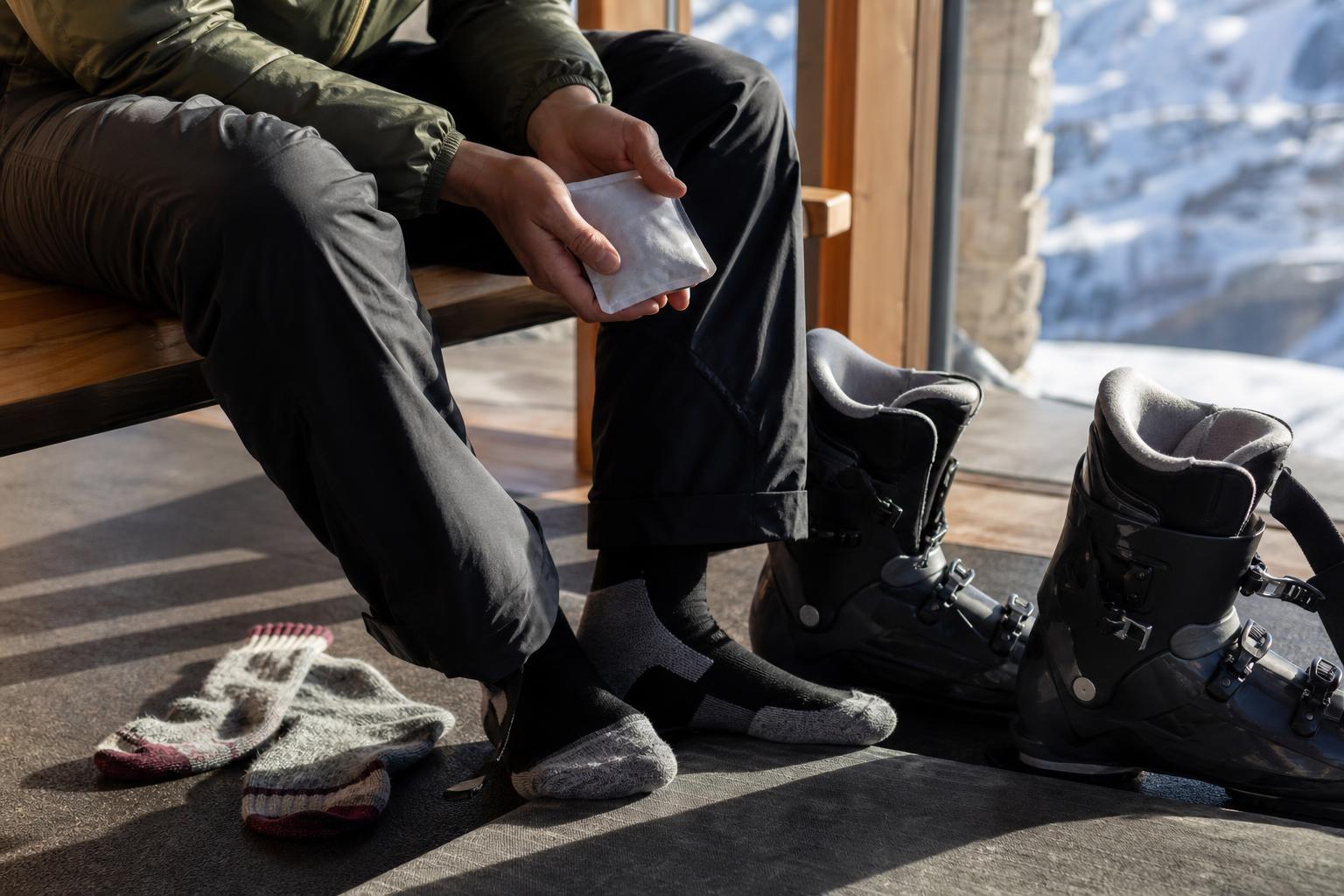
Air-activated hand warmers work because iron powder inside the pouch reacts with oxygen and releases heat. Open the wrapper when you are ready to use one, follow that product's placement instructions, and never put it directly against your skin. For warm feet, start with one well-fitting ski sock, a correctly fitted boot, and dry liners before adding battery heat.
That order matters. A thicker sock can crowd a close-fitting boot, and a warmer cannot correct a pressure point. Sort out fit and moisture first, then choose between air-activated warmers, rechargeable heaters, heated ski gloves, heated ski socks, or boot heaters for the job you still need.
How do hand warmers work?
HotHands' official FAQ, checked October 24, 2026, says its air-activated warmers contain iron powder, water, salt, activated charcoal, and vermiculite. Air entering the pouch lets the iron powder react with oxygen. That oxidation produces heat. The maker identifies these warmers as single-use rather than reusable.
Air-activated, reusable, and electric types of hand warmers
The three common categories make heat in different ways:
- Air-activated warmers: iron reacts with oxygen after you open the wrapper. HotHands identifies its warmers as single-use.
- Reusable sodium acetate warmers: flexing the metal disc starts a heat-producing reaction in a supersaturated solution. Snappy Heat's explanation, checked October 24, 2026, says boiling its used pad melts the crystals back into a liquid that can react again after cooling.
- Rechargeable electric warmers: a battery sends power to a heating element. Heat level and runtime depend on the model and setting, so check the maker's specification page and manual.
A product labeled reusable might mean a resettable gel pack or a battery-powered device. Read the mechanism and charging or reset instructions before packing it for a ski day.
How to use hand warmers safely
HotHands says not to apply its warmers directly to skin. Its FAQ explains that young children, older adults, people with diabetes, and others with reduced heat sensation may be more vulnerable. The manufacturer tells users to read and follow every instruction on the package. We checked that warning on October 24, 2026.
Kobayashi Healthcare's UK HotHands instructions, also checked October 24, say to check the skin each hour during long use, stop if the warmer becomes uncomfortably hot, and not use it while sleeping. Use the warmer type named for the location, such as a hand, body, or toe product, and place it only where that package directs. Do not substitute a hand warmer for a product designed to sit in a ski boot.
Are mittens warmer than gloves?
Mittens are generally warmer than gloves. Hestra's cold-hands guide, checked October 24, 2026, says mittens are roomier and trap more air. Gloves separate each finger but make it easier to work buckles, zippers, and pole straps.
Choose enough room to flex your fingers without a loose cuff that lets snow in. A thin liner can help during transitions, but the complete glove system still has to fit without squeezing. Pack a dry spare if your first pair tends to get wet. Renting outerwear for a trip? Can you rent ski clothes explains why gloves are usually not included.
How heated ski gloves work
Heated ski gloves place battery-powered heating elements around part of the hand. You charge the batteries, connect them as the manual describes, and select a heat level. Higher output usually trades runtime for more heat, so compare setting-specific figures when the maker publishes them.
As one manufacturer example, Therm-ic lists its Ultra Heat Boost Gloves with three heat levels and up to 7.5 hours of warmth from the included batteries. We checked that page on October 24, 2026. “Up to” is the maker's maximum claim for that model, not a promise for every temperature or setting.
Charge the batteries before leaving, keep the connectors dry, and use only the charger and battery combination the maker approves. A heated glove still needs the right fit and a weather barrier. Battery heat does not make a soaked liner dry.
How heated ski socks and boot heaters work
Heated ski socks run a heating element through part of the sock and connect it to a battery near the cuff. The sock must lie smooth inside the boot. A wire, connector, battery, or wrinkle that creates a pressure point works against the reason you bought the system.
Therm-ic's PowerSocks Heat Uni set, checked October 24, 2026, pairs heated socks with S-Pack 1200 batteries and lists up to 14 hours of heat. The company's official FAQ gives ranges by setting: 12 to 14 hours at level one, 5.5 to 7.5 hours at level two, and 3.75 to 4.25 hours at level three. Those figures apply to the named battery system.
Boot heaters use a battery to power heating elements built into or fitted beneath an insole. Therm-ic lists its C-Pack 1300 for compatible heated insole systems, with three heat settings and up to 13 hours of battery life. We checked that specification on October 24, 2026. Check compatibility with your insole, liner, and bootfitter before altering a fitted boot.
Follow the maker's washing, charging, and storage instructions. Therm-ic tells owners to remove sock batteries before washing and not to tumble-dry the socks.
How to keep feet and toes warm in ski boots
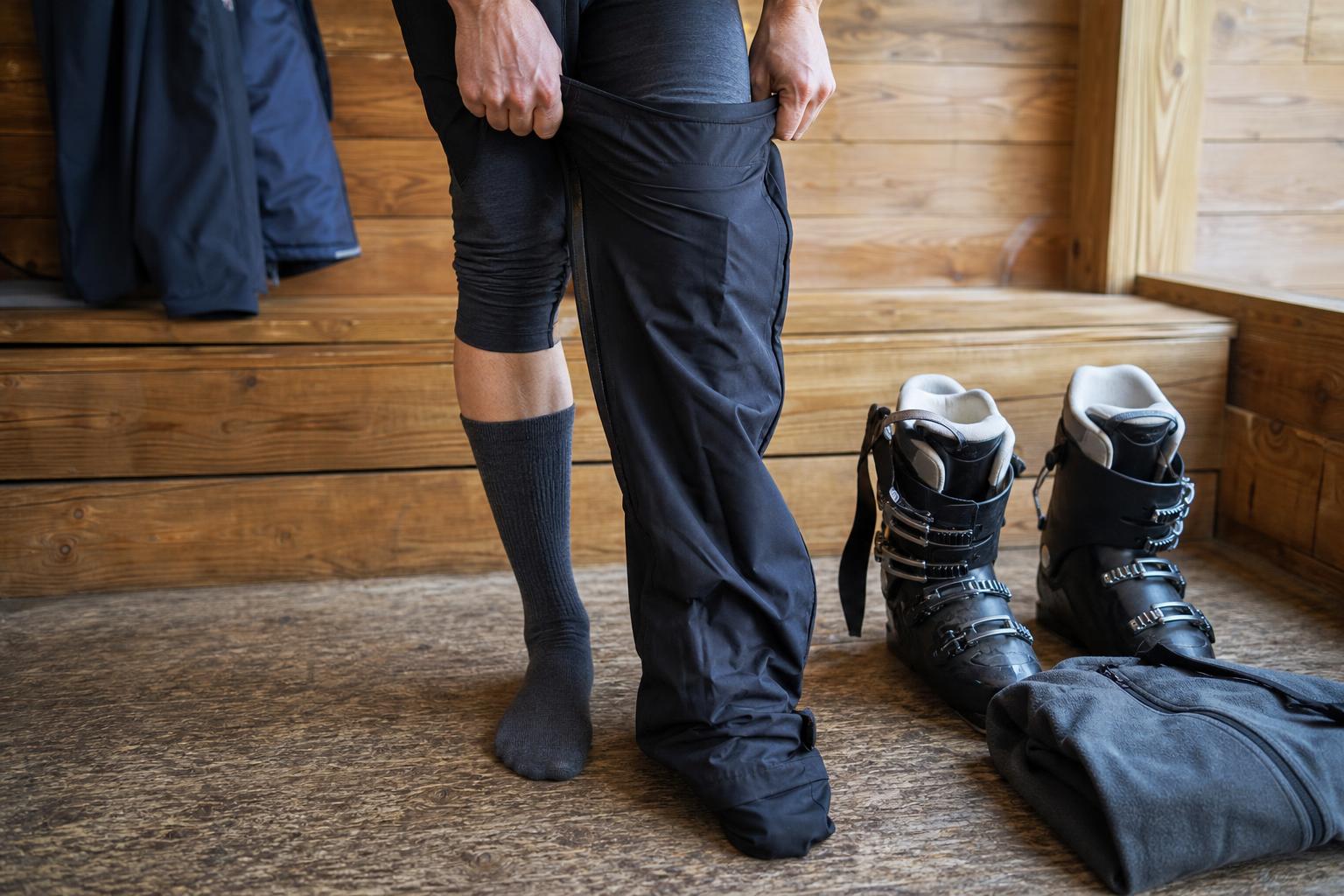
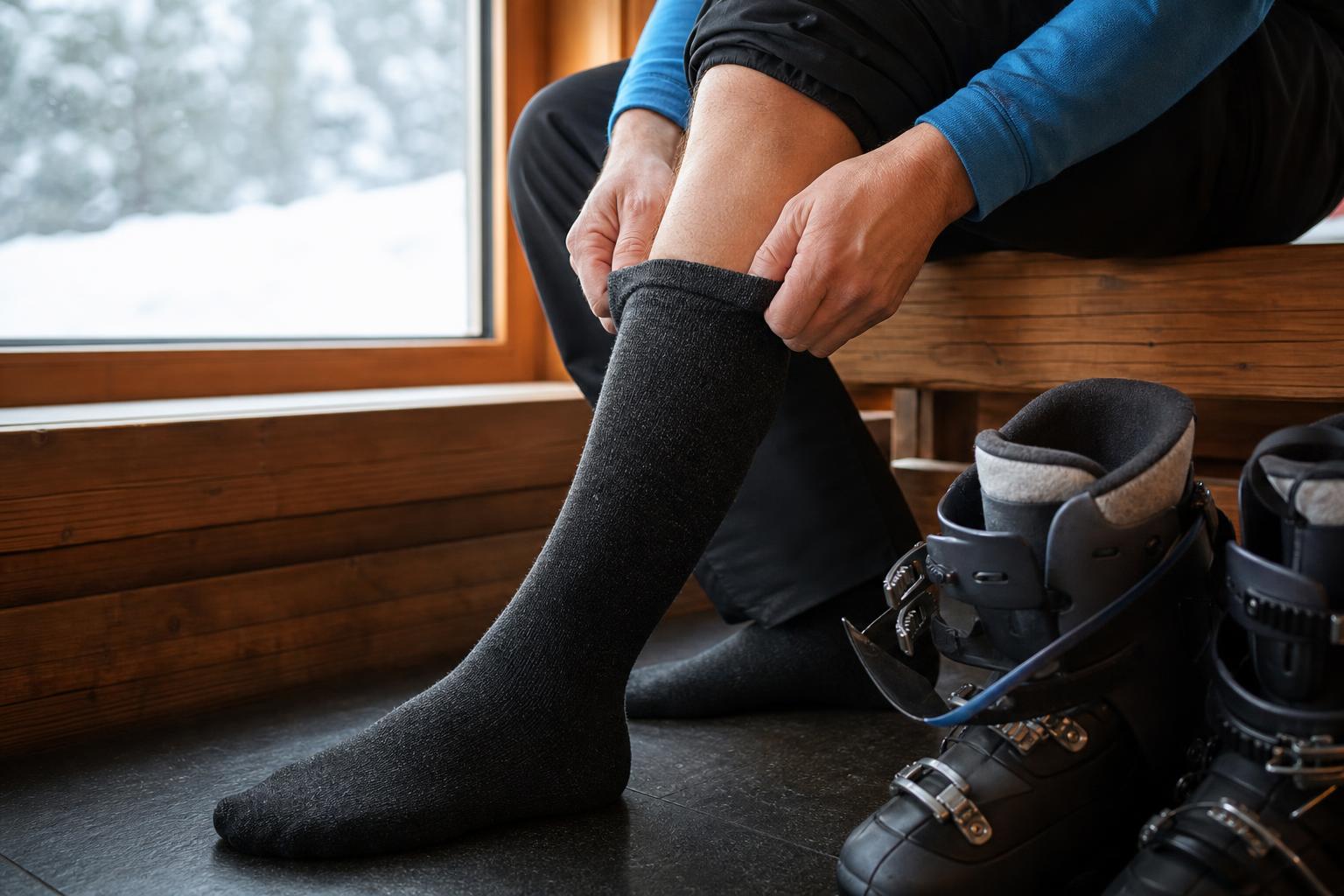
Start with space and dryness rather than another sock. Wear one ski sock pulled smooth, with no base-layer cuff tucked into the boot. Smartwool's cushion guide, checked October 24, 2026, pairs thinner socks with close-fitting boots and more cushion with boots that have more room. Our guide to ski socks explains sock height, cushioning, and why two pairs can create wrinkles or pressure.
Your toes need enough room to move while your heel stays controlled. Atomic's boot-fit guide, checked October 24, 2026, says thick socks can make the boot too tight, reduce space, and lead to cold toes. If you feel a clear pressure point or cannot keep your toes warm, take the boots to a bootfitter rather than sizing up on your own.
Dry the liners and footbeds after each ski day. Damp material is a poor start for first chair. Pull the parts out, give them open airflow, and keep them away from radiators or other strong direct heat. Follow our full routine for drying ski boots overnight.
Dry boots and heated boot bags
A normal ski boot bag organizes boots for the drive or flight, but it does not dry a closed, wet liner. Open the bag when you arrive and remove damp liners and footbeds.
Heated boot bags are a separate category. They warm boots before you put them on and may offer a drying setting, depending on the model. Transpack lists its Heated Boot Bag with three settings (Hot, Dry and Warm) and both 110 V wall and 12 V car plugs. We checked those maker specifications on October 24, 2026. Follow the bag and boot makers' instructions before applying that heat to custom liners, footbeds, or integrated electronics.
Warm gear can make the parking-lot change easier. Dry liners, one smooth sock, and a boot that holds your foot without crushing it do more of the daily work. Add a heater only after those basics fit together.