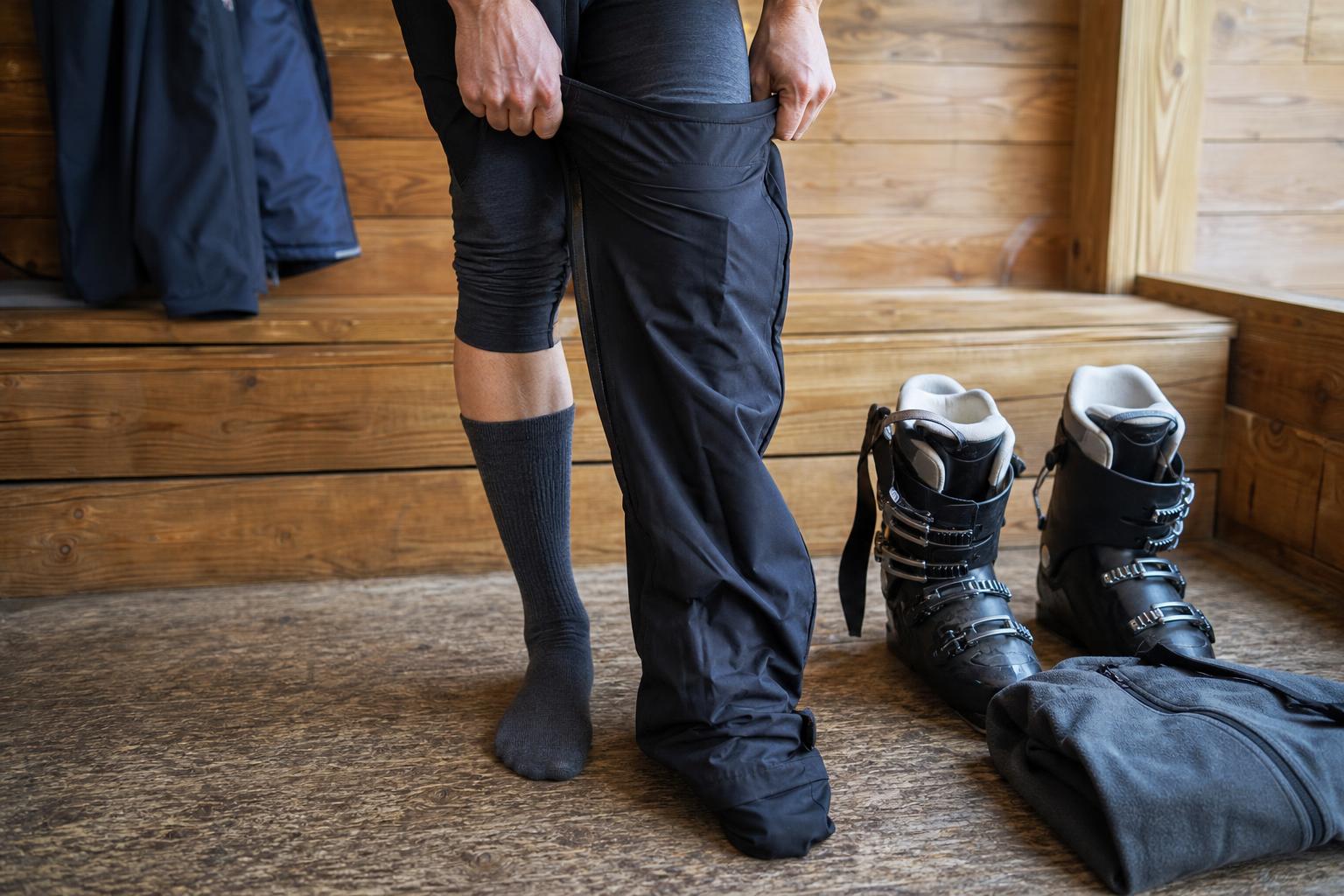
Wear one pair of close-fitting merino wool or synthetic base-layer bottoms under your ski pants. A light layer is enough under insulated pants or in mild weather. Choose a warmer base layer, or add a thin fleece layer under roomy shell pants, when it gets colder. Skip cotton, jeans, and bulky everyday leggings.
Your base layer should sit close to your skin without pinching. Its job is to move sweat away and add the right amount of warmth without creating folds under your pants or inside your boots. For the rest of your ski outfit, use the same base, insulation, and outer-shell logic in our guide to what to wear skiing.
What to wear under ski pants by temperature band
Treat mild, cold, and very cold as clothing choices rather than fixed thermometer readings. Wind, sun, lift time, how hard you ski, and whether your pants have insulation can change what feels comfortable.
Mild weather
Wear lightweight merino or synthetic thermal bottoms under insulated ski pants. The same single light base layer can work under shell pants if you run warm or ski hard enough to sweat. Open the outer-leg vents before adding or removing clothing if your pants have them.
Cold weather
Move to a midweight base layer. Under insulated snow pants, stop there unless you know you run cold. Under uninsulated shell pants, add a thin fleece short or three-quarter-length insulating layer if the cut leaves room to move.
Icebreaker classifies its 200-weight merino as suitable for moderate-to-cool conditions and 240-weight as a cold-conditions option. Those are the brand's fabric categories, not universal temperature ratings. We checked its base-layer guide on October 24, 2026.
Very cold weather
Start with a warm, fitted base layer. Add one low-bulk fleece layer under shell pants, or rely on the built-in insulation in insulated ski pants. Keep enough space to bend your knees and squat without the waistband pulling or the layers binding.
Icebreaker places its 320-weight merino in its coldest-conditions category. Your comfort can differ, so carry the extra insulating layer rather than starting the morning in two tight base layers. Too much clothing can make you sweat, then leave those layers damp on the chairlift.
Merino vs. synthetic vs. cotton
Merino wool: Merino manages moisture, helps regulate temperature, and resists odor. It suits multi-day trips when you plan to air out a base layer between ski days. It can cost more than synthetic fabric and needs care around abrasion and washing. Icebreaker's guide, checked October 24, 2026, describes merino as comfortable in a range of activity levels but presents the comparison from a merino brand's point of view.
Synthetic: Polyester and nylon base layers move moisture, dry quickly, and can feel breathable during hard skiing. They make sense for skiers who sweat heavily, wash layers often, or prefer a smooth, stretchy fit. Patagonia describes its Capilene base layers as moisture-wicking and fast-drying; we checked that official page on October 24, 2026.
Cotton: Leave cotton thermals, sweatpants, and denim at home. Icebreaker's official guide says cotton absorbs sweat and stays wet. Damp cotton also adds weight and takes space under your outer pants.
Neither merino nor synthetic wins for every skier. Choose the fabric that fits smoothly, works with your laundry plan, and provides enough warmth for your pants and weather.
Why jeans and everyday leggings do not work well
Jeans are stiff, bulky, and made largely from cotton. Their seams can press against your legs, and wet denim dries slowly. They also restrict the knee and hip movement you need to get on a chairlift or buckle ski boots.
Technical leggings can work as a base layer when they use merino or synthetic fabric and have flat seams. Everyday fashion leggings may contain cotton, thick waistbands, ankle zippers, pockets, or raised seams. Check the fabric label and sit in a skiing stance before treating them as thermals.
Underwear under thermal bottoms is optional. If you wear it, choose a close-fitting merino or synthetic pair with seams that do not rub. Avoid loose boxers or cotton briefs that trap sweat under the base layer.
Bibs, insulated ski pants, and shells
The leg layers stay the same under bibs and waist-high ski pants. Bibs add fabric over your torso, so you may need less insulation at the waist and lower back. Arrange the base-layer top and bib straps so you can use the bathroom without removing more clothing than necessary.
A bib also reduces the need to tuck several tops into a waistband. Keep the overlap smooth instead. With either outer style, match insulation to the garment: a lightweight base layer under insulated pants, and adjustable base plus fleece under an uninsulated waterproof shell.
Ski socks go against your skin
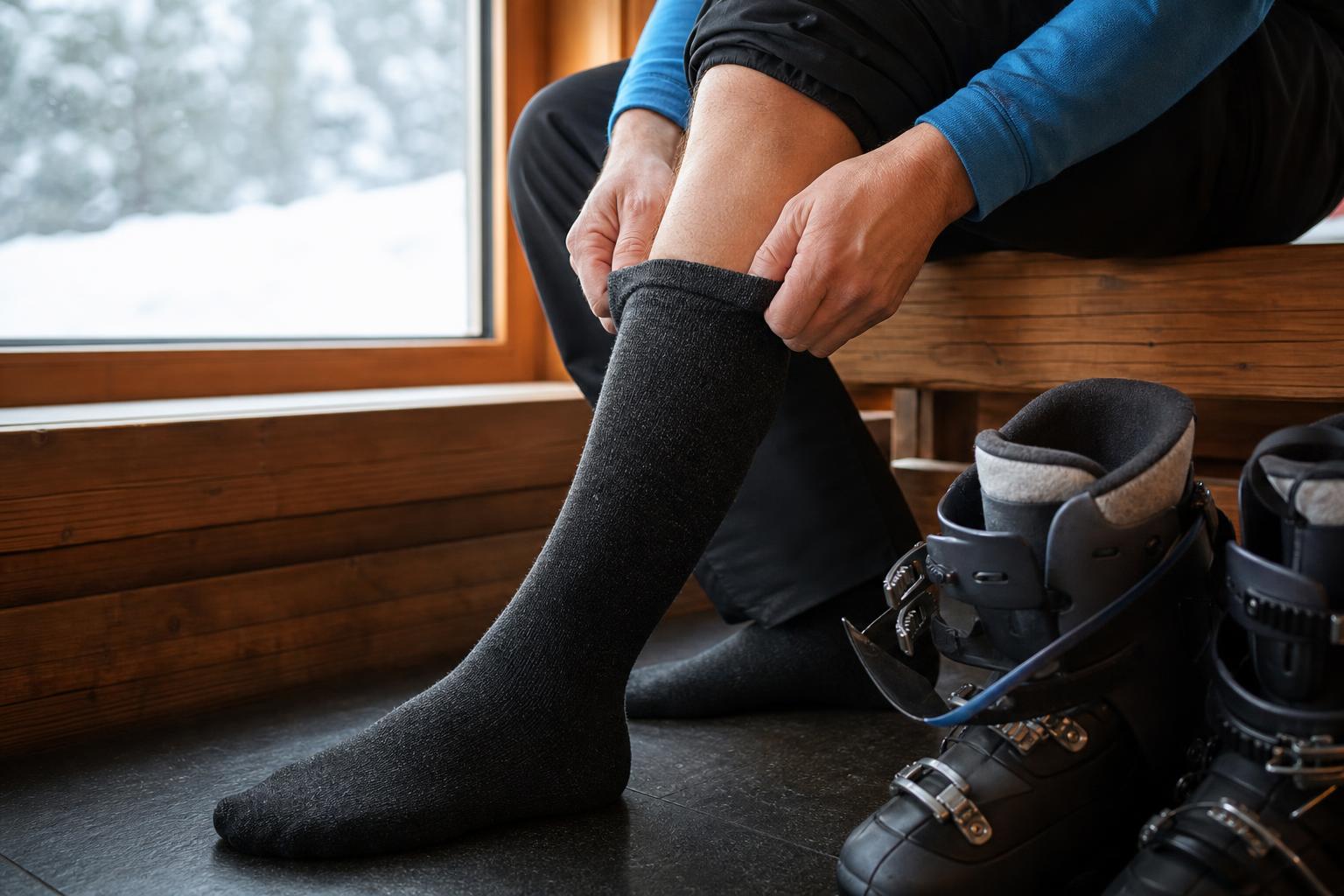
Wear one pair of tall ski socks against your skin. Pull the socks on first, then keep other fabric out of the ski boot. Three-quarter-length base-layer bottoms should stop above the boot cuff. If you wear full-length bottoms, pull the hem over the top of the sock and make sure no wrinkle sits inside the boot.
Darn Tough recommends wearing its ski socks under the base layer and warns against cramming several pant layers into the boot. It also says doubling socks can make a fitted boot too tight. We checked the brand's ski-sock guide on October 24, 2026.
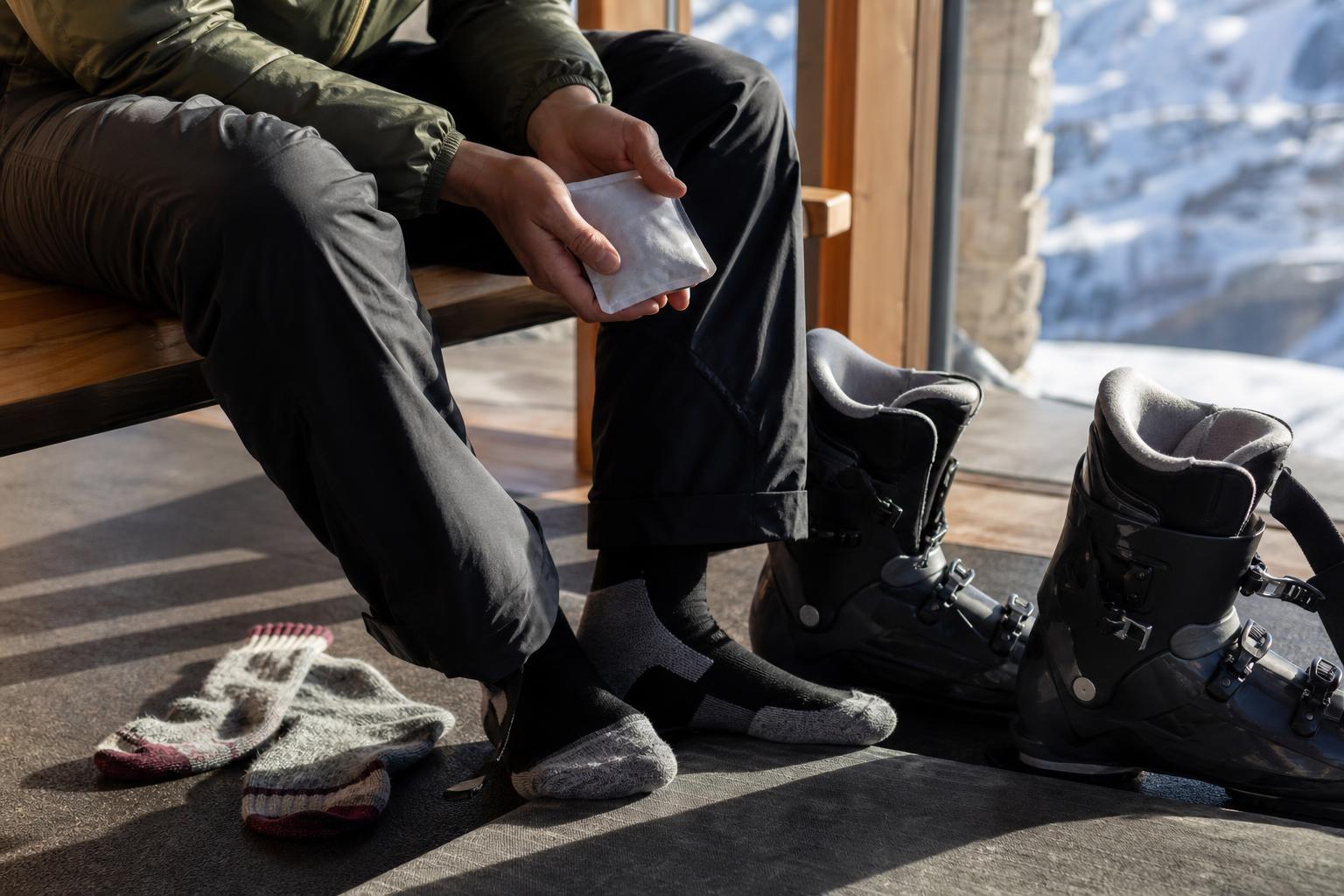
Do not tuck ski pants into the boots. Their gaiters fit over the boot shells to help keep snow out. For sock height, weight, and fit details, read ski socks explained.
Check the fit before the first ski day
Put on the complete lower-body system at home: underwear if you use it, base layer, optional fleece, ski socks, pants or bibs, and boots. Flex forward, squat, and lift each knee. Remove any layer that bunches behind the knee, presses under the waistband, or enters the boot cuff.
Bring one warmer option when the forecast looks uncertain. Changing a base-layer weight is usually cleaner than stacking several tight bottoms. The goal is simple: dry fabric next to your skin, enough insulation for the day, and no extra material interfering with your boots.