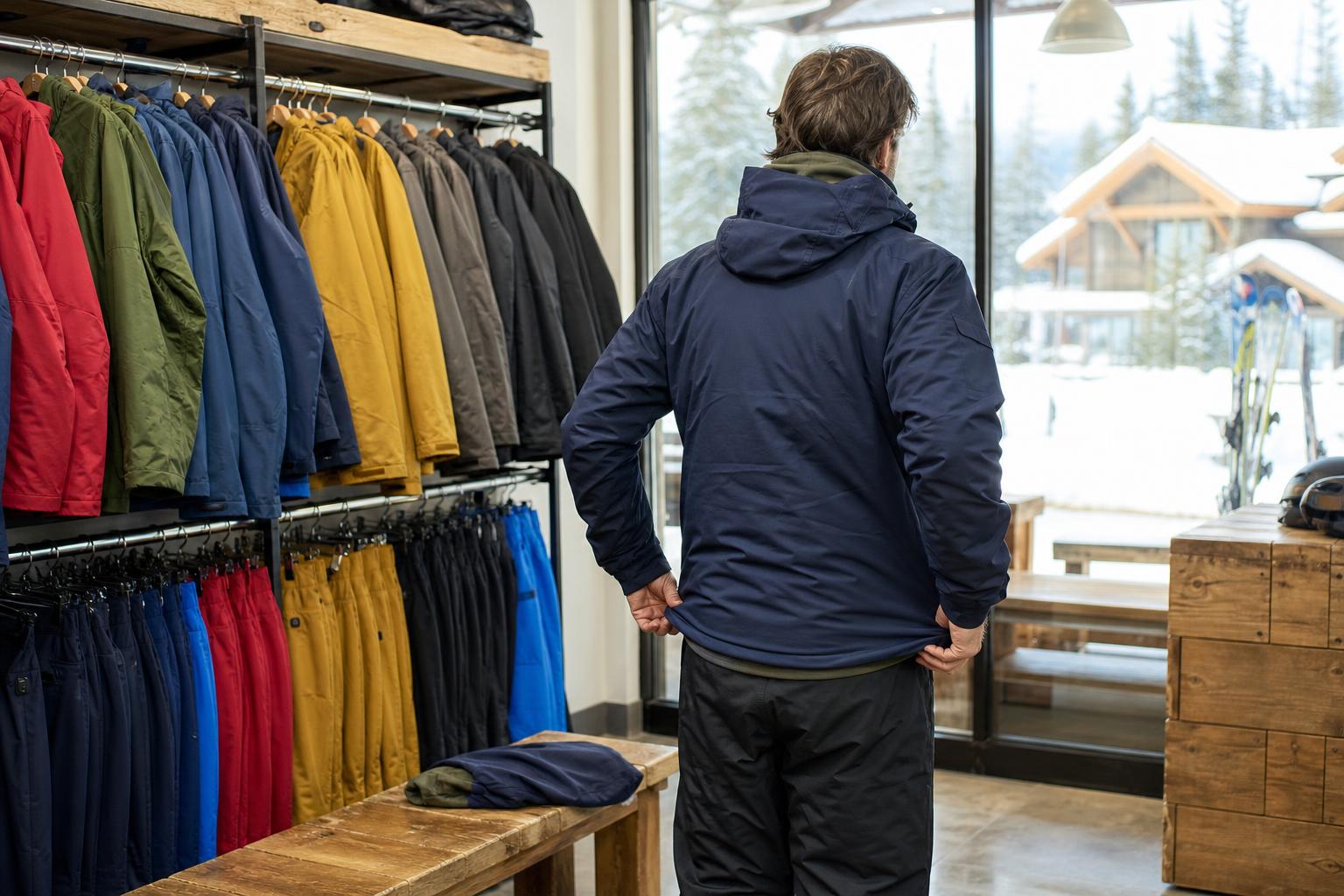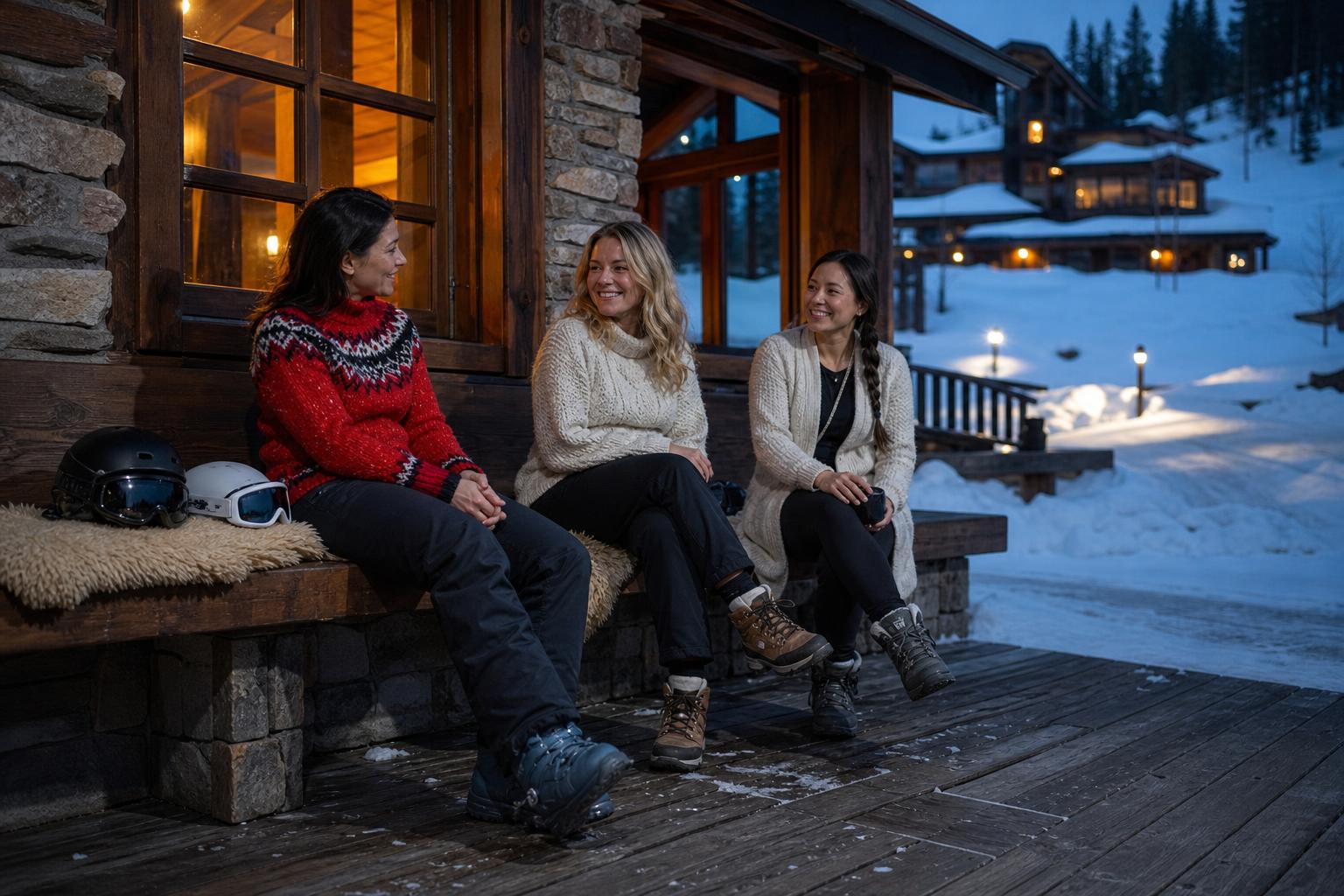
An après ski outfit should be warm enough for the walk, dry enough to sit in comfortably, and casual or polished enough for the place you are going. At a slopeside bar, that can mean ski pants, a dry base layer, and a sweater. For a lodge dinner or town, change into dry trousers, a knit top, and winter boots.
You do not need a separate wardrobe or a costume. Keep the pieces that are clean and comfortable, change anything damp, and let the venue decide how dressed up to get. The practical details matter more than whether the outfit looks like a ski-shop window.
What après ski actually means
Après ski is the time after skiing, not one event with one dress code. It may be a drink on a sunny deck while you still have ski pants on, dinner inside the lodge, or an evening in town after a shower. The phrase describes the occasion. Après ski attire means what you wear after skiing.
That range explains why online ski outfit ideas can look inconsistent. A fitted one-piece suit may be a slope outfit. A sweater and trousers may be an evening outfit. Both can appear under the same search, but they solve different jobs.
Before choosing clothes, answer three questions:
- Are you going straight from the lifts or returning to your room first?
- Will you walk across snow or ice between buildings?
- Is the venue a casual bar, a lodge restaurant, or a place with a stated dress code?
If you can answer those, you can build the outfit from clothes you already planned to bring. For the ski-day layers underneath, start with our guide to what to wear skiing.
Outfit formulas by setting
Slopeside bar: keep the useful ski layers
Go straight from the lifts in ski pants, a dry base-layer top, and a fleece, sweater, or light insulated jacket. Open the ski jacket indoors or hang it where it can start drying. Put the helmet and goggles away rather than wearing them around the room.
Change out of ski boots if you have access to your winter boots. If you must keep ski boots on at the bar, loosen them while seated. Fasten them again before walking, and change into winter boots before heading through the village. Damp gloves and a neck gaiter belong with the jacket, not stuffed into its pockets for the evening.
This is the most casual version of après. Matching colors are optional. A clean midlayer and dry hair or hat do more for the outfit than adding another decorative piece.
Lodge dinner: change the lower half
Use a simple formula: dry top, warm sweater, dry trousers, winter boots, and the same outer jacket for the walk. Straight trousers, dark jeans, or clean leggings all work when the venue is casual. Choose the pair that feels comfortable after a day in ski boots and fits over the base layer only if that layer is dry.
A collared shirt, simple knit, or fitted long-sleeve top can sit under the sweater if the restaurant feels more polished. You still need a jacket between the room and the dining area, so check that the indoor layers fit comfortably underneath it.
If the lodge publishes a dinner dress code, follow that rather than a general après guide. Pack one adaptable dinner outfit instead of guessing at several levels of formality.
Town: dress for the walk first
For shops, a brewery, or a casual restaurant in town, start with winter boots and dry pants. Add a base layer or long-sleeve top, a sweater, and your ski jacket or another warm coat. This outfit can handle repeated moves between cold streets and heated rooms because you can remove the jacket and sweater.
A knit dress or skirt can work for an indoor plan, but pair it with warm tights and footwear that handles the route outside. Do not let an indoor outfit force you into smooth-soled shoes on a snowy walk. Carry lighter shoes only when you know you can change at the door.
These formulas work for women and men. Cut, color, and silhouette change the style, but the sequence stays the same: dry layer, warm layer, weather layer, stable footwear.
Cute ski outfits without a separate wardrobe
Cute ski outfits usually look intentional because they repeat a color or shape, not because every piece belongs to a matching set. Pick one color family for the sweater, hat, or socks, then keep the jacket and pants neutral if that is what you already own. A close-fitting knit under a roomier jacket also creates a clear shape without adding bulk.
Try one of these simple combinations:
- Dark ski pants, a bright sweater, and clean snow boots
- Dry leggings, a long knit, a ski jacket, and a small crossbody bag worn indoors
- Straight trousers, a base-layer top, a cardigan, and winter boots
- A knit dress, warm tights, a long coat, and snow-ready boots for dinner
- Jeans, a classic crewneck sweater, and a jacket for a casual town evening
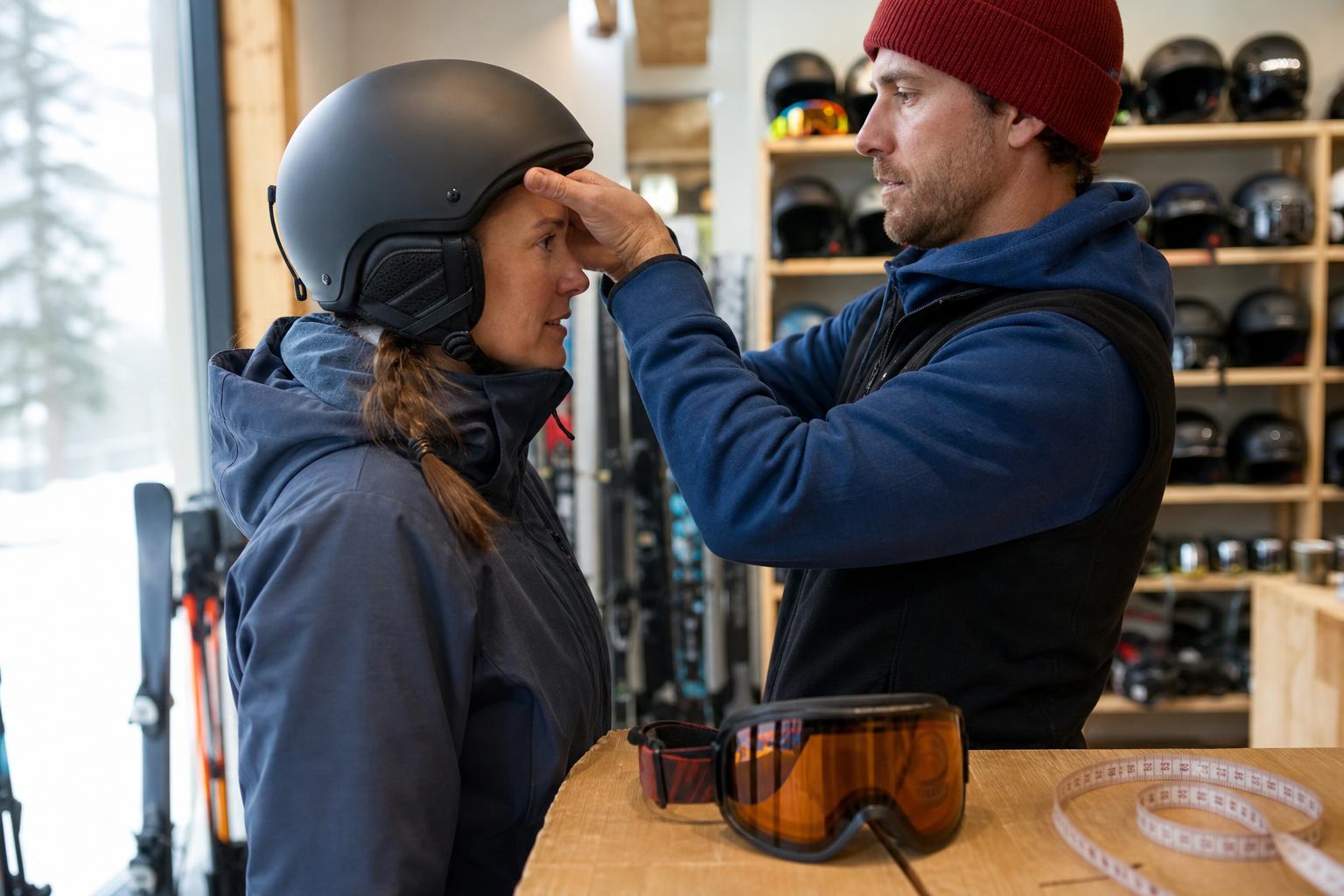
Treat goggles, a helmet, and bulky gloves as equipment. Put them away after the hill. A knit hat can stay if your hair is damp or the table is outside, but it does not need to match every layer.
Footwear for snow and ice
Wear winter boots with an outsole that gives you a stable step on the route you expect. The boot should stay secure at the heel, leave room for your toes, and work with one comfortable pair of socks. Brush packed snow from the tread before entering a smooth indoor floor.
Ski boots are for the hill and the short transition around the base area. They are stiff, bulky, and inconvenient for a long evening in town. Change into winter boots as soon as you can. Fashion boots, sneakers, and heeled shoes can stay in the room unless the entire route is dry and you can change at the venue.
Traction aids are not a substitute for careful steps, and not every device suits every surface. If you bring a removable pair, follow its instructions and take it off before walking on indoor floors unless its maker says otherwise.
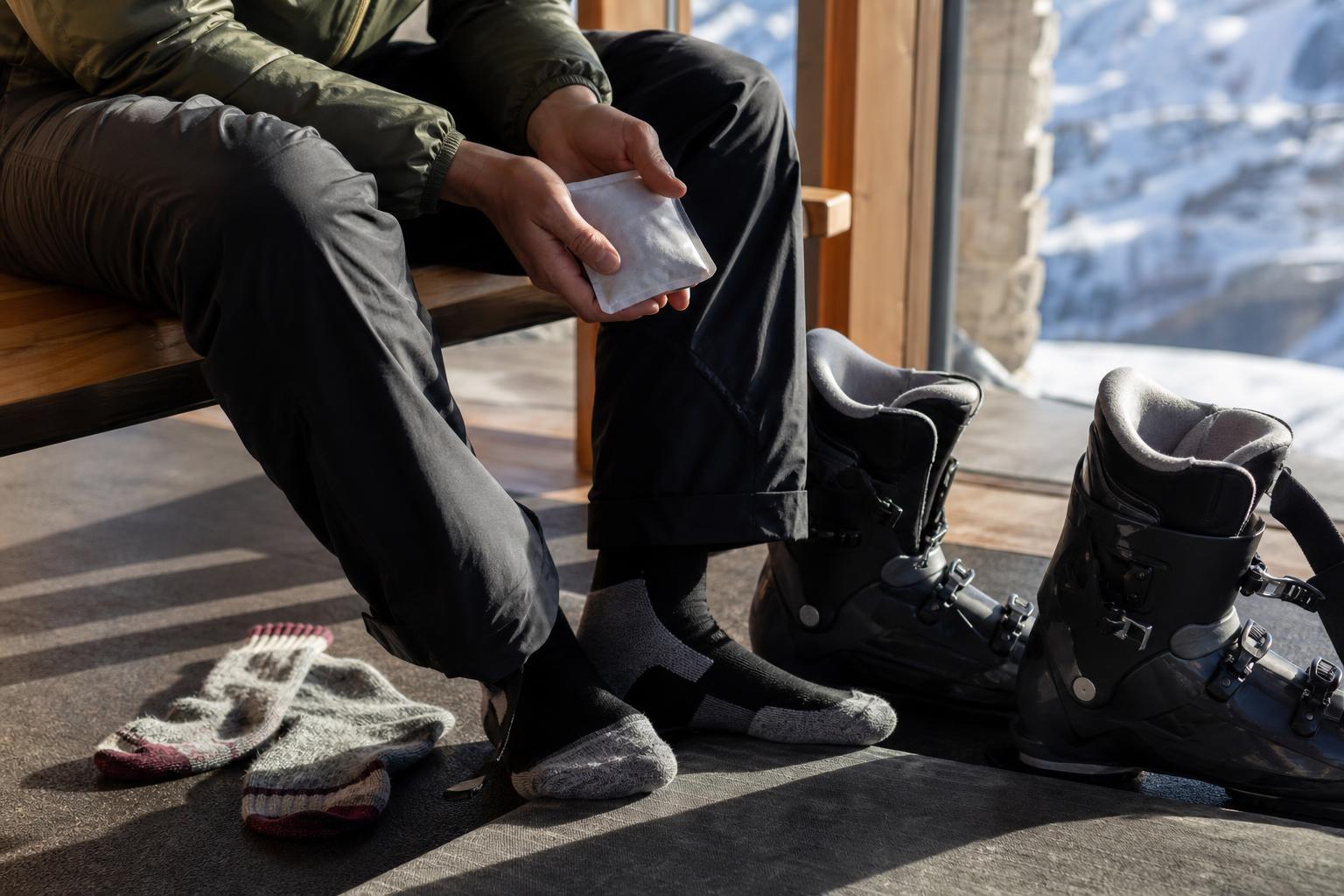
Pack après socks separately from ski socks. If your ski socks are damp or compressed after the day, a fresh pair makes the change into winter boots more comfortable. Our ski socks guide explains why adding a second sock inside a fitted ski boot is not the answer during skiing.
What to keep on and what to change
Do a quick dampness check when you finish the last run. Feel the back, waistband, sock soles, glove lining, and neck gaiter. Sweat often collects where a layer sits under a pack or waistband even when the front feels dry.
Keep on:
- Ski pants for an immediate, casual slopeside stop if they are dry
- A dry base-layer top
- A fleece, sweater, or light jacket that still feels comfortable
- Your ski jacket for outdoor seating or the walk between buildings
Change:
- A damp base layer
- Wet ski socks
- Gloves or a neck gaiter holding snow or sweat
- Ski boots when winter boots are available
- Ski pants before a longer dinner if they feel wet, tight, or too warm indoors
Do not cover a soaked base layer with a dry sweater and hope it becomes comfortable. Change the layer touching your skin first. Hang the wet piece where air can reach it, and keep it out of the bag holding your dinner clothes.
For a full trip, bring enough base layers to rotate while one dries. The ski trip packing list helps separate slope clothing, off-slope clothes, and cabin items.
Pack an après ski outfit in a carry-on
One compact après ski outfit can cover several evenings. Wear the bulkiest winter boots during travel if they are comfortable for the journey, then pack one dry bottom, two tops, and one sweater or fleece. Your ski jacket can serve as the outdoor coat.
A small carry-on capsule looks like this:
- One pair of dark trousers or leggings
- One long-sleeve top
- One second top that changes the look
- One sweater, fleece, or cardigan
- One pair of fresh socks per evening, or enough to wash and dry
- Underwear and sleepwear
- A small bag for damp ski layers
Choose pieces that all work with the same trousers and boots. Roll the tops inside the sweater, keep clean socks together, and put footwear in a separate sack. If your airline's cabin allowance permits it, keep one complete slope outfit with you too. The après clothes are useful, but fitted boots and the layers needed for the first ski day are harder to replace.
Avoid packing a second coat solely for dinner unless the plans truly require it. The space is usually more useful for a dry base layer, spare gloves, or clothes that can rotate through several evenings.
The short version
There is no single après ski dress code. Wear ski pants and a dry midlayer for a casual stop beside the lifts. Change into dry trousers, a sweater, and winter boots for dinner or town. Put snow-ready footwear and dry skin layers ahead of the look, then use color and one knit piece to make the outfit feel deliberate.
Not sure you want to buy ski clothes for one trip? See can you rent ski clothes, and keep cold fingers and toes in check with the warm hands and feet guide.
Helping someone prepare for a first ski trip? The ski gifts directory has ideas that do not require guessing their clothing or boot size.